
 Arizona Cardinals Flag
 Atlanta Falcons Flag
 Baltimore Ravens Flag
 Buffalo Bills Flag
 Carolina Panthers Flag
 Chicago Bears Flag
 Cincinnati Bengals Flag
 Cleveland Browns Flag
 Dallas Cowboys Flag
 Denver Broncos Flag
 Detroit Lions Flag
 Green Bay Packers Flag
 Houston Texans Flag
 Indianapolis Colts Flag
 Jacksonville Jaguars Flag
 Kansas City Chiefs Flag
 Las Vegas Raiders Flag
 Los Angeles Chargers Flag
 Los Angeles Rams Flag
 Miami Dolphins Flag
 Minnesota Vikings Flag
 New England Patriots Flag
 New Orleans Saints Flag
 New York Giants Flag
 New York Jets Flag
 Philadelphia Eagles Flag
 Pittsburgh Steelers Flag
 San Francisco 49ers Flag
 Seattle Seahawks Flag
 Tampa Bay Buccaneers Flag
 Tennessee Titans Flag
 Washington Commanders Flag
 Arizona Diamondbacks Flag
 Atlanta Braves Flag
 Baltimore Orioles Flag
 Boston Red Sox Flag
 Chicago Cubs Flag
 Chicago White Sox Flag
 Cincinnati Reds Flag
 Cleveland Guardians Flag
 Colorado Rockies Flag
 Detroit Tigers Flag
 Houston Astros Flag
 Kansas City Royals Flag
 Los Angeles Angels Flag
 Los Angeles Dodgers Flag
 Miami Marlins Flag
 Milwaukee Brewers Flag
 Minnesota Twins Flag
 New York Mets Flag
 New York Yankees Flag
 Oakland Athletics Flag
 Philadelphia Phillies Flag
 Pittsburgh Pirates Flag
 San Diego Padres Flag
 San Francisco Giants Flag
 Seattle Mariners Flag
 St. Louis Cardinals Flag
 Tampa Bay Rays Flag
 Texas Rangers Flag
 Toronto Blue Jays Flag
 Washington Nationals Flag
 Atlanta Hawks Flag
 Boston Celtics Flag
 Brooklyn Nets Flag
 Charlotte Hornets Flag
 Chicago Bulls Flag
 Cleveland Cavaliers Flag
 Dallas Mavericks Flag
 Denver Nuggets Flag
 Detroit Pistons Flag
 Golden State Warriors Flag
 Houston Rockets Flag
 Indiana Pacers Flag
 LA Clippers Flag
 Los Angeles Lakers Flag
 Memphis Grizzlies Flag
 Miami Heat Flag
 Milwaukee Bucks Flag
 Minnesota Timberwolves Flag
 New Orleans Pelicans Flag
 New York Knicks Flag
 Oklahoma City Thunder Flag
 Orlando Magic Flag
 Philadelphia 76ers Flag
 Phoenix Suns Flag
 Portland Trail Blazers Flag
 Sacramento Kings Flag
 San Antonio Spurs Flag
 Toronto Raptors Flag
 Utah Jazz Flag
 Washington Wizards Flag
 Anaheim Ducks Flag
 Arizona Coyotes Flag
 Boston Bruins Flag
 Buffalo Sabres Flag
 Calgary Flames Flag
 Carolina Hurricanes Flag
 Chicago Blackhawks Flag
 Colorado Avalanche Flag
 Columbus Blue Jackets Flag
 Dallas Stars Flag
 Detroit Red Wings Flag
 Edmonton Oilers Flag
 Florida Panthers Flag
 Los Angeles Kings Flag
 Minnesota Wild Flag
 Montreal Canadiens Flag
 Nashville Predators Flag
 New Jersey Devils Flag
 New York Islanders Flag
 New York Rangers Flag
 Ottawa Senators Flag
 Philadelphia Flyers Flag
 Pittsburgh Penguins Flag
 San Jose Sharks Flag
 Seattle Kraken Flag
 St. Louis Blues Flag
 Tampa Bay Lightning Flag
 Toronto Maple Leafs Flag
 Vancouver Canucks Flag
 Vegas Golden Knights Flag
 Washington Capitals Flag
 Winnipeg Jets Flag
House Divided & Rivalry Ideas
Patriots vs Seahawks Prediction and Game Day Guide
Patriots vs Seahawks can be hard to judge if you lock in one exact score too early. A better approach is to read the matchup through game script, scoring range, and the few factors that usually shift the pace fastest. This guide does that first, then helps fans choose a game-day setup that fits their team and space.
Quick Answer for Patriots vs Seahawks
The easiest way to read Patriots vs Seahawks is to think in score bands, not one exact final score. If pressure, field position, and stalled drives shape the game, lean LOW. If both teams move the ball but finish unevenly, stay in the BASE range. If protection holds up, explosive plays show up early, and red-zone trips turn into touchdowns, the game can drift into the HIGH range.
The same logic also works for the fan setup. If you already know which team you are backing, a one-team display usually makes the most sense. If you want something more flexible for future weekends, start with NFL flags and choose based on the space you actually use on game day.
What to Check Before Kickoff
Before making any prediction, check the few details that can shift this matchup faster than most fans expect.
First, confirm the official kickoff time and broadcast listing once the matchup is final on the schedule. That sounds obvious, but it matters because many readers land on matchup pages early and come back closer to game day.
The best last-check sources are the official NFL schedule, official team channels, and final local broadcast listings. That keeps the guide useful without relying on details that may change late in the week.
Second, do not treat all injury news the same. If you only have time to check a few areas, prioritize them in this order:
- Quarterback
- Offensive line
- Top pass rusher
- Best coverage defender
Those four spots affect scoring efficiency much faster than most surface-level updates do. A limited quarterback can change the entire offensive ceiling. A shaky offensive line can collapse the rhythm of a game even when the skill players look fine on paper. One disruptive edge rusher can force a lower script. One strong coverage defender can take away the easy throws that usually keep drives alive.
Third, use this 30-second pregame checklist:
- Which team is more likely to create pressure without blitzing heavily?
- Which offense is more likely to get short fields from turnovers, special teams value, or mistake-driven field position?
- Which side is more likely to finish red-zone trips with touchdowns instead of field goals?
If you have those three answers, your Patriots vs Seahawks prediction is already more grounded than most rushed pregame picks.
Patriots vs Seahawks Score Range in One Minute
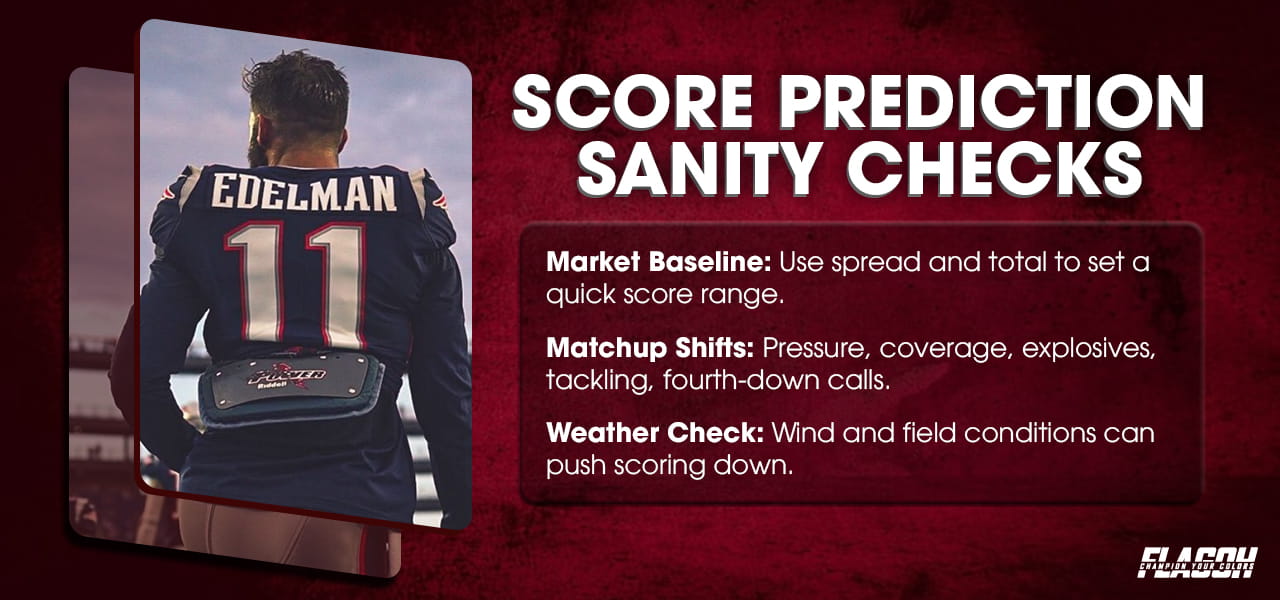
If you want the quickest practical read on this matchup, start with these score bands:
- LOW: 17-13 to 20-16
- BASE: 23-20 to 27-24
- HIGH: 31-27 to 34-30
The reason the range moves is simple. Most NFL totals swing on three levers: pace, short fields, and red-zone finishing. When two of those move down, the score usually settles lower than casual fans expect. When two of them move up, the game can climb quickly even without becoming a full shootout.
The important thing is not to get too confident with one precise final score too early. This kind of matchup is easier to read when you start with a realistic band, then tighten your view once the first few drives show what is actually unfolding.
A useful way to pressure-test that range is to compare it with the current market baseline, then adjust only if the matchup signals clearly point elsewhere. If the script looks balanced but pressure is disrupting the rhythm, stay conservative. If protection is cleaner than expected and chunk plays arrive early, the range can move up faster than most pregame reads suggest.
How to Read the Most Likely Game Script
The table below gives you the clearest way to sort this matchup quickly. What makes this matchup interesting is that it is less about forcing a highlight-driven prediction and more about reading which side controls disruption first. If pressure lands early, the game can tighten quickly. If protection settles and the offenses stay on schedule, the scoring band becomes much easier to widen.
| Game Script | Score Range | What Must Be True | Early Signal to Watch | Main Risk |
| LOW | 17-13 to 20-16 | Pressure affects rhythm, explosive gains stay limited, drives stall | Punts, sacks, long third downs | One short-field turnover can lift scoring fast |
| BASE | 23-20 to 27-24 | Normal pace, mixed finishes, some chunk gains but not constant explosives | Sustained drives and manageable third downs | Strong red-zone efficiency can push it higher |
| HIGH | 31-27 to 34-30 | Clean pockets, easier completions, chunk plays, better touchdown conversion | Early explosives and missed tackles | Sacks, penalties, or stalled drives can drag it back down |
LOW script
A LOW script usually shows up early. The pocket feels unstable, the rhythm looks uneven, and every possession matters more because clean drives are harder to build. In this version of the matchup, field position, pressure, and wasted scoring chances matter more than big plays. If the game opens with punts, sacks, and conservative sequencing, there is no reason to force a shootout view.
BASE script
BASE is the most realistic lane in many NFL matchups because it reflects how games usually work in real life. Both teams do enough to create scoring chances, but not enough to make every possession feel automatic. You get a few chunk plays, a few clean drives, and a few empty stretches. One or two red-zone stops matter. One or two execution swings decide whether the final lands near the middle of the range or creeps upward late.
If the game feels competitive but not loose, this is probably the right place to stay.
HIGH script
A HIGH script needs help to get there. It usually needs cleaner protection, easier third-down success, stronger yards after catch, or enough missed tackles to create cheap points. Once those things show up together, totals rise fast because the game stops demanding long, perfect drives and starts handing out easier scoring paths.
This is the version where one good quarterback stretch, one broken tackle, or one short-field mistake can turn a reasonable total into a much bigger finish.
What Can Change the Score Fast
Before settling on a score range, focus on the few factors that can shift this matchup quickly. These are the early signals most likely to push Patriots vs Seahawks lower, higher, or keep it near the expected middle.
Pressure and protection
This is the first thing to watch because it touches almost everything else. Pressure changes timing, accuracy, sack risk, turnover risk, and play-calling all at once. A team that can affect the pocket without having to sell out with pressure packages usually controls the game more cleanly than the box score first suggests.
Protection matters just as much. Even strong skill talent can disappear when the quarterback is rushed into uncomfortable throws or when the offense loses the ability to use the full playbook.
Red-zone finishing
Raw yardage can mislead. Red-zone finishing usually tells you more.
A team can move the ball well and still leave points on the field if drives end in field goals instead of touchdowns. That is why red-zone efficiency matters more than casual viewers often think. The swing between seven and three changes the shape of the whole game. Over multiple trips, it becomes one of the fastest ways to move a matchup from BASE to HIGH, or from BASE down into something tighter and more frustrating.
Wind and field position
The weather does not have to be extreme to matter. A little wind can affect deeper throws, longer kicks, return decisions, and even how aggressively teams call certain downs. Once the game becomes more about field position than flow, the margin for error shrinks quickly.
That does not automatically force a LOW outcome, but it does make easy points harder to find. In a matchup where both teams are trying to avoid giving away short scoring chances, that matters.
Best Flag Picks for Patriots Fans, Seahawks Fans, and Neutral NFL Setups
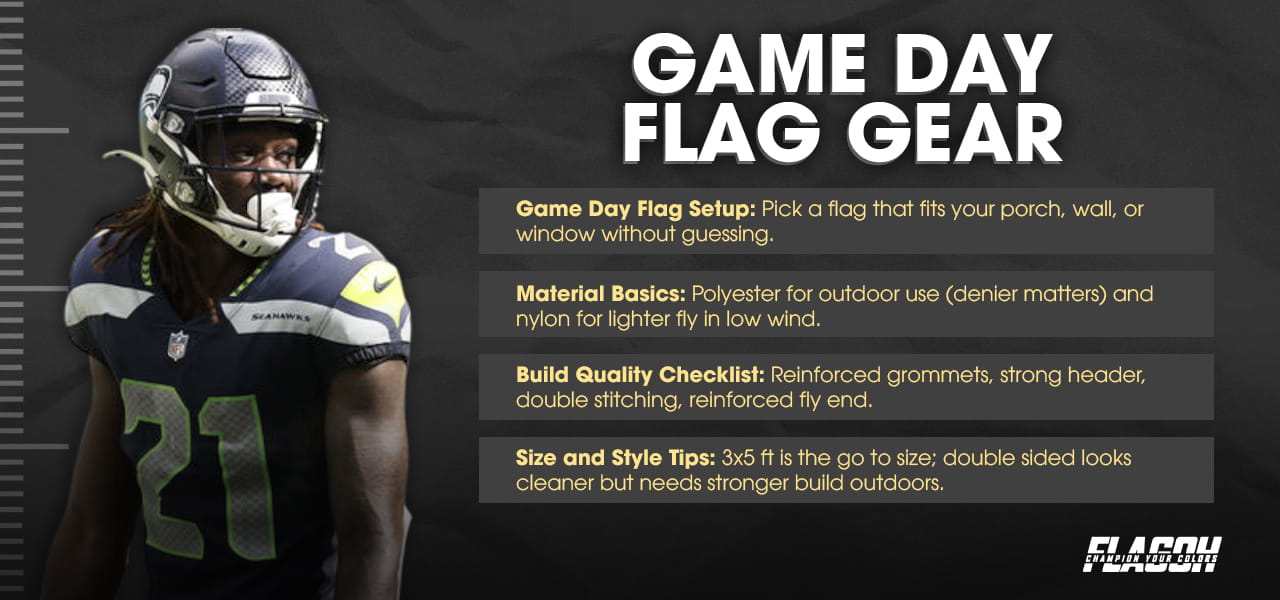
The best game-day setup usually depends on where the flag will actually be seen. Porch displays, wall setups, entryways, and watch-party rooms all work a little differently, so the smartest choice is usually the one that fits the space first, then the team.
Best pick for Patriots fans
If you are backing the New England Patriots, a dedicated New England Patriots Flag usually makes the strongest visual choice. It gives the setup a clear identity and works especially well in porches, entryways, wall displays, and watch spaces already built around one team. A team-first setup usually feels more complete on game day and still works after the matchup is over.
Best pick for Seahawks fans
Seattle fans usually get the strongest look with a dedicated Seattle Seahawks Flag setup. That works best when the goal is to make the fan side clear rather than neutral. For a porch, den, garage wall, or watch-party room, a team-first display usually feels sharper and more intentional than a broader NFL-only setup, especially if the flag is meant to stay up beyond one weekend.
Best pick for a general NFL game-day display
If the space is shared, the fan base is mixed, or you want a setup that stays useful for other games, start with NFL flags. This is the most flexible option and the easiest one to carry into future matchups without needing to rebuild the whole look every week.
A neutral NFL setup is also a smart choice when you want the space to reflect football culture more broadly, not just one team. This option is usually the safest choice for shared spaces, gift buying, or rooms that need to work across multiple games instead of one single team identity.
Patriots vs Seahawks FAQs
What is the most realistic score range for Patriots vs Seahawks?
A range is usually more useful than one exact final score. LOW fits a slower, field-position-driven game, BASE fits a more balanced flow, and HIGH fits cleaner protection with more explosive scoring chances.
What matters more than raw yardage in this matchup?
Red-zone finishing matters more. Teams can pile up yards and still underperform on the scoreboard if possessions keep ending in field goals instead of touchdowns.
How should I update my prediction after the first quarter?
Watch the first two real possessions from each side. If pressure and punts are controlling the pace, lean LOW. If both offenses are functional but not dominant, stay BASE. If protection is clean and explosive plays appear early, shift higher.
Should I choose a team flag or a general NFL flag for this matchup?
Choose a team flag when you already know your side and want the display to feel more personal. Choose an NFL flag when you want something more flexible for future matchups or a mixed-fan setup.
What flag size works best for a watch party?
For many homes, 3×5 ft is the safest all-around size because it reads clearly without overwhelming the room, porch, or wall space.
Which setup works best for a one-team fan space versus a neutral setup?
A one-team fan space usually looks better with a Patriots or Seahawks-specific flag. A neutral setup works better with a broader NFL look, especially when the space is shared or used for different games across the season.
How should I use a prediction guide like this without overreacting to one storyline?
Start with the most likely script, then confirm it against late-week injury news, official kickoff details, and the early rhythm of the game. A prediction guide works best as a decision framework, not a guaranteed final score.
Patriots vs Seahawks is easier to judge when you focus on the likely script instead of forcing one exact score too early. That gives fans a clearer way to read the matchup and a simpler way to choose a setup that fits their side and their space. FlagOh helps make that decision easier without turning game day into something more complicated than it needs to be.