
 Arizona Cardinals Flag
 Atlanta Falcons Flag
 Baltimore Ravens Flag
 Buffalo Bills Flag
 Carolina Panthers Flag
 Chicago Bears Flag
 Cincinnati Bengals Flag
 Cleveland Browns Flag
 Dallas Cowboys Flag
 Denver Broncos Flag
 Detroit Lions Flag
 Green Bay Packers Flag
 Houston Texans Flag
 Indianapolis Colts Flag
 Jacksonville Jaguars Flag
 Kansas City Chiefs Flag
 Las Vegas Raiders Flag
 Los Angeles Chargers Flag
 Los Angeles Rams Flag
 Miami Dolphins Flag
 Minnesota Vikings Flag
 New England Patriots Flag
 New Orleans Saints Flag
 New York Giants Flag
 New York Jets Flag
 Philadelphia Eagles Flag
 Pittsburgh Steelers Flag
 San Francisco 49ers Flag
 Seattle Seahawks Flag
 Tampa Bay Buccaneers Flag
 Tennessee Titans Flag
 Washington Commanders Flag
 Arizona Diamondbacks Flag
 Atlanta Braves Flag
 Baltimore Orioles Flag
 Boston Red Sox Flag
 Chicago Cubs Flag
 Chicago White Sox Flag
 Cincinnati Reds Flag
 Cleveland Guardians Flag
 Colorado Rockies Flag
 Detroit Tigers Flag
 Houston Astros Flag
 Kansas City Royals Flag
 Los Angeles Angels Flag
 Los Angeles Dodgers Flag
 Miami Marlins Flag
 Milwaukee Brewers Flag
 Minnesota Twins Flag
 New York Mets Flag
 New York Yankees Flag
 Oakland Athletics Flag
 Philadelphia Phillies Flag
 Pittsburgh Pirates Flag
 San Diego Padres Flag
 San Francisco Giants Flag
 Seattle Mariners Flag
 St. Louis Cardinals Flag
 Tampa Bay Rays Flag
 Texas Rangers Flag
 Toronto Blue Jays Flag
 Washington Nationals Flag
 Atlanta Hawks Flag
 Boston Celtics Flag
 Brooklyn Nets Flag
 Charlotte Hornets Flag
 Chicago Bulls Flag
 Cleveland Cavaliers Flag
 Dallas Mavericks Flag
 Denver Nuggets Flag
 Detroit Pistons Flag
 Golden State Warriors Flag
 Houston Rockets Flag
 Indiana Pacers Flag
 LA Clippers Flag
 Los Angeles Lakers Flag
 Memphis Grizzlies Flag
 Miami Heat Flag
 Milwaukee Bucks Flag
 Minnesota Timberwolves Flag
 New Orleans Pelicans Flag
 New York Knicks Flag
 Oklahoma City Thunder Flag
 Orlando Magic Flag
 Philadelphia 76ers Flag
 Phoenix Suns Flag
 Portland Trail Blazers Flag
 Sacramento Kings Flag
 San Antonio Spurs Flag
 Toronto Raptors Flag
 Utah Jazz Flag
 Washington Wizards Flag
 Anaheim Ducks Flag
 Arizona Coyotes Flag
 Boston Bruins Flag
 Buffalo Sabres Flag
 Calgary Flames Flag
 Carolina Hurricanes Flag
 Chicago Blackhawks Flag
 Colorado Avalanche Flag
 Columbus Blue Jackets Flag
 Dallas Stars Flag
 Detroit Red Wings Flag
 Edmonton Oilers Flag
 Florida Panthers Flag
 Los Angeles Kings Flag
 Minnesota Wild Flag
 Montreal Canadiens Flag
 Nashville Predators Flag
 New Jersey Devils Flag
 New York Islanders Flag
 New York Rangers Flag
 Ottawa Senators Flag
 Philadelphia Flyers Flag
 Pittsburgh Penguins Flag
 San Jose Sharks Flag
 Seattle Kraken Flag
 St. Louis Blues Flag
 Tampa Bay Lightning Flag
 Toronto Maple Leafs Flag
 Vancouver Canucks Flag
 Vegas Golden Knights Flag
 Washington Capitals Flag
 Winnipeg Jets Flag
News
How to Wash a Flag the Right Way with FlagOh
Washing a flag sounds simple, but one wrong hot cycle can melt fibers and strip the color from your favorite team banner or porch flag. Outdoor flags live in sun, rain, mud, and bird droppings, so they need more care than a load of towels. At FlagOh, after years of working with polyester, nylon, and POD inks, we know what keeps flags flying longer. This guide shows you how to wash a flag safely without ruining it.
Know Your Flag’s Fabric Before You Wash It
Before you even fill the sink, take a moment to check the tag—especially if you’re figuring out how to wash a flag at home for the first time. Not all flags are created equal, and treating a delicate burlap garden flag the same way you treat a heavy-duty polyester sports flag is a recipe for disaster.
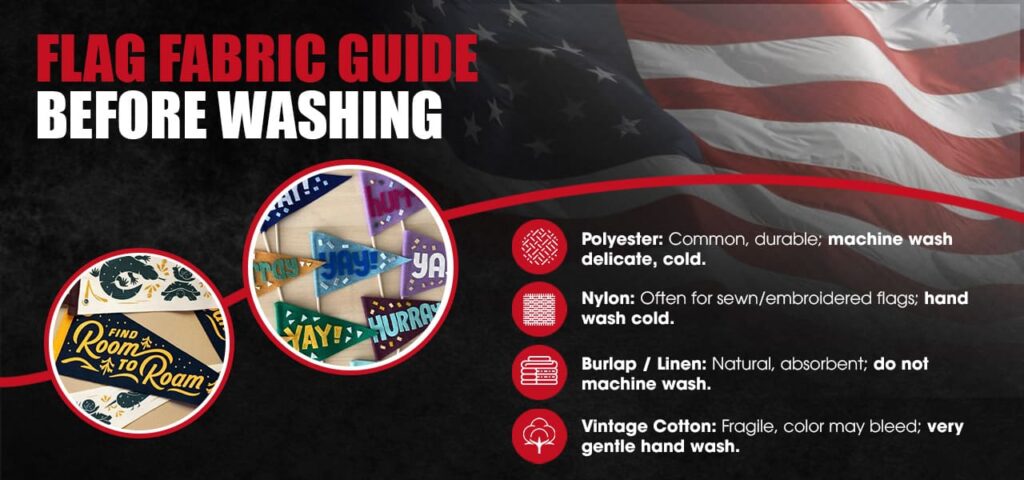
Most of the flags we sell at FlagOh, and indeed most outdoor flags on the market today, are made of polyester (100D to 600D). This material is synthetic, durable, and designed to hold dye-sublimated ink exceptionally well. In flag specs, 100D to 600D refers to the denier rating—the higher the number, the thicker and harder-wearing the fabric for outdoor use. These are the workhorses of the flag world and are generally machine-safe if you’re careful, especially when you combine a gentle cycle with cold water and mild detergent.
Nylon is another common material, especially for official U.S. flags with sewn stripes and embroidered stars. It’s tough but can be sensitive to surface abrasion.
On the other hand, if you have a decorative burlap or linen garden flag, keep it away from the washing machine. These natural or porous fabrics hold too much water; a machine cycle will leave them misshapen, frayed, or prone to mold. Similarly, vintage cotton flags are incredibly delicate—they shrink easily, and their red dyes love to bleed into the white stripes. For these, gentle hand care is the only way to go.
The “Cheat Sheet” for Flag Materials
| Material Type | Recommended Method | Water Temp | Bleach? | Drying |
| Polyester | Machine (Delicate) | Cold | NO | Air Dry |
| Nylon | Hand Wash | Cold | NO | Air Dry |
| Burlap | Hand Soak | Cool | NO | Lay Flat |
| Cotton | Hand Soak | Cool | NO | Lay Flat |
How to Wash a Flag in a Washing Machine
Always start by checking the care label on your flag. If it says “hand wash only” or “do not wash, treat those instructions as your primary rule.
If you have a standard outdoor polyester flag (100D–600D) or a sports team banner, the washing machine is efficient—as long as you treat it like technical gear, not a bath towel. Most of the damage we see comes from hot water and high-speed cycles, not from the detergent itself. Follow these 4 steps to ensure a safe wash:
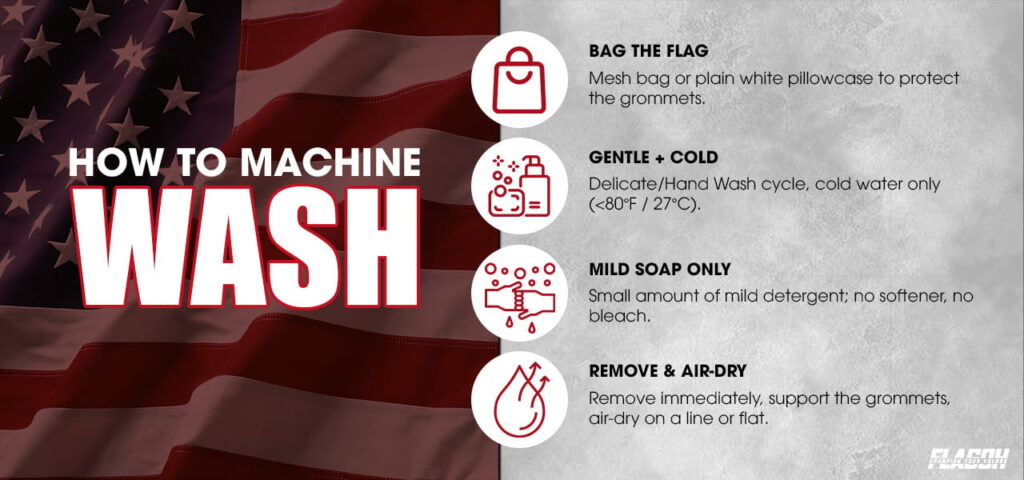
Step 1: Protect the Grommets (Crucial)
The metal grommets on your flag are heavy and can bang against the washing machine drum during the spin cycle. This risks chipping your machine’s enamel or tearing the flag fabric.
- Action: Always place your flag inside a mesh laundry bag before loading. If you don’t have one, tie it securely inside a plain white pillowcase. This creates a safety barrier.
Step 2: Select the Safe Settings
Standard cycles are too rough for flag headers and stitching.
- Cycle: Choose Delicate or Hand Wash to minimize agitation.
- Temperature: Set to Cold Water Only (<80°F / 27°C). Hot water is the enemy—it breaks down UV-resistant coatings and warps synthetic fibers.
Step 3: Add the Right Detergent
Chemicals can do more damage than dirt.
- Do: Use a small amount of mild liquid detergent.
- Don’t: Never use fabric softener (it leaves a waxy residue that attracts dust) and never use chlorine bleach. Bleach will dissolve sublimation ink and turn your white stripes yellow.
Step 4: Remove Immediately
Don’t let the flag sit in a wet heap once the cycle ends, as this sets deep, hard-to-remove wrinkles.
- Action: Remove the flag as soon as the washer stops. Support the weight of the wet fabric with your hands as you lift it out to prevent the heavy grommets from stretching the fabric, then go straight to air-drying.
How to Clean Delicate Flags Without Damage
For U.S. flags with embroidered stars, delicate burlap garden flags, or vintage pieces you’re afraid to risk, the “Bathtub Method” is the platinum standard. It gives you total control over the water temperature and handling.
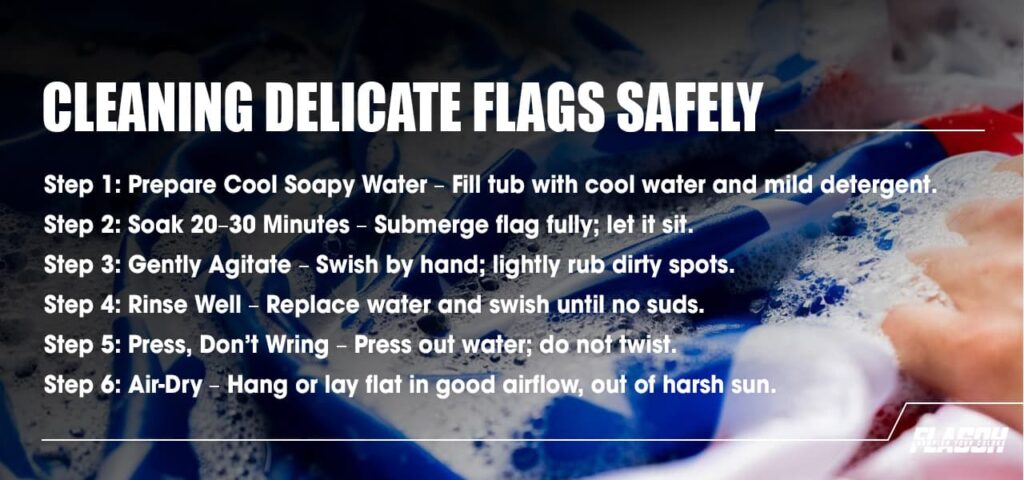
Step 1: Prepare the Bath
Start with a clean slate. Fill a bathtub or large laundry sink with cool water. Add a small capful of mild liquid detergent and mix it in with your hands until it’s evenly dispersed.
Step 2: The Soak (Crucial)
Submerge the flag completely, ensuring no part is floating dry above the surface. Let it sit for 20–30 minutes.
- Why? This static soak allows the water and detergent to lift embedded dust and pollen out of the fibers naturally, so you don’t have to scrub hard later.
Step 3: Gentle Agitation
After soaking, gently swish the flag through the water with your hands to simulate a slow wash cycle. If there are visible dirty spots, lightly rub the fabric against itself using your thumbs. Avoid aggressive scrubbing on embroidered stars or printed logos.
Step 4: Rinse Thoroughly
Drain the dirty, soapy water and refill the tub with fresh, cool water. Swish the flag again to remove the detergent. Repeat this until no suds remain.
- Tip: Be thorough—leftover soap residue can bake into the fabric and turn brown when exposed to the sun.
Step 5: Extract Water (Do Not Wring)
Carefully lift the flag and press it against the side of the tub to push the water out. Alternatively, sandwich the flag between two dry towels and press down.
- Warning: Never wring, twist, or “rope” the flag. This breaks the internal coating of the fibers and creates permanent creases that are nearly impossible to remove.
Step 6: Air Dry
Move the flag to a drying area with good air circulation. Either hang it on a line (distributing the weight evenly) or lay it flat on dry towels. Keep it away from heaters or direct scorching sunlight while wet to prevent shrinking.
Deep Cleaning Tips for Heavily Soiled Flags
Sometimes, a standard wash just won’t cut it. Because outdoor flags are constantly exposed to sun, rain, and dirt, the best way to clean a flag is often to spot-treat the specific problem.
Mold and Mildew
If your flag has been hanging in a shady, damp spot, you might see black or green spots. Don’t reach for the bleach. Instead, mix a solution of white vinegar and water (1:1 ratio). Soak the moldy area for about 15 minutes, then gently scrub it with a soft-bristle brush (an old toothbrush is perfect). The acidity of the vinegar kills the mold without bleaching the color.
Tree Sap
This is a nightmare for flags parked under pine trees. Since sap is oil-based, water won’t touch it. The hack here is rubbing alcohol (or hand sanitizer). Dab it onto the sap to break down the resin, then rinse it off immediately.
Grease and Oil
Tailgating is fun, but BBQ grease is not. If your team flag gets splattered, apply a drop of dish soap directly to the dry stain before you wash it. Dish soap is designed to cut grease on pans, and it works just as well on polyester. Massage it in, let it sit for 10 minutes, and then wash as usual.
Bird Droppings
It happens. The trick here is patience. Let it dry completely so you can scrape off the solids first. Then, pre-soak the area in warm water with an enzyme-based detergent to break down the rest before washing.
How to Dry Your Flag Safely
If there is one thing you take away from this guide, let it be this: Never put a flag in a tumble dryer.
Synthetic fibers are essentially plastic. Even on a “low heat” setting, a dryer can get hot enough to warp the fabric, shrink the headers, or melt the specialized coatings.
Instead, hang the flag on a clothesline or lay it flat on a clean towel. It will dry quickly; just keep it out of direct, scorching sunlight while it’s very wet, as water droplets can act like magnifying glasses and cause spot-fading.
What about wrinkles? If your flag dries with creases, don’t panic. The safest way to smooth them out is with a garment steamer. It relaxes the fibers without touching them. If you must use an iron, use the “Synthetic” setting and always place a thick cotton towel between the iron and the flag. Never iron directly on the print—heat can reactivate the ink and cause it to smear or “ghost.”
Flag Etiquette and Maintenance
We often get asked, “Is it illegal to wash the American flag?” and see people searching “how do you wash an American flag” because they’re worried about doing something disrespectful. The answer is no. According to the U.S. Flag Code (4 U.S. Code § 8), the focus is on treating the flag with respect, not on banning normal cleaning. A dirty, soiled flag does not represent the country well, so washing a flag to restore it to a “fitting condition for display” is considered a respectful act.
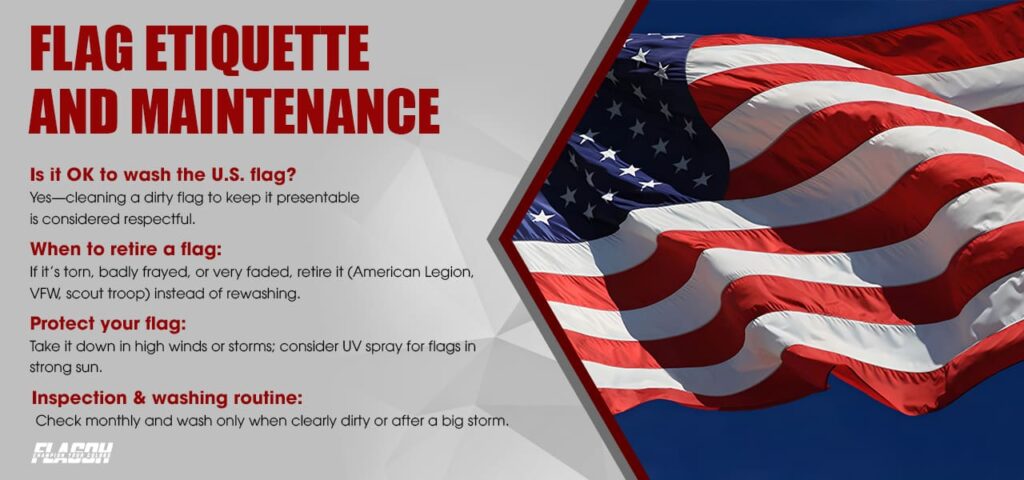
However, cleaning has its limits. If your flag is badly tattered, the fly end is frayed beyond repair, or the red has faded to a pale pink, washing won’t bring it back. At that point, the right thing to do is retire the flag and dispose of it in a dignified way, often through a local American Legion, VFW post, or scout troop. Many of these organizations hold regular flag retirement ceremonies and can guide you on the most respectful way to hand your flag over.
To keep a new flag looking good for as long as possible, take it down when winds exceed about 40 mph, avoid flying it in severe storms, and consider using a UV fabric protector spray if it lives in direct sunlight.
In practice, inspect your flag at least once a month and wash it when it looks visibly dirty or after a heavy storm, instead of on every minor mark. This balance helps you keep it presentable without wearing the fibers out too quickly.
Learning how to wash a flag safely really comes down to a few basics. Match the method to the fabric, use cold water with a mild detergent, treat stains gently, and always air-dry instead of tumble drying so each wash extends its life. In our experience, flags cared for this way last noticeably longer and keep their colors stronger than those washed hot or run through the dryer. When a flag is too torn or faded to look dignified, retire it respectfully—and when you’re ready for a new one, choosing a durable outdoor or sports flag from FlagOh and caring for it with this routine will keep your colors flying bright.