
 Arizona Cardinals Flag
 Atlanta Falcons Flag
 Baltimore Ravens Flag
 Buffalo Bills Flag
 Carolina Panthers Flag
 Chicago Bears Flag
 Cincinnati Bengals Flag
 Cleveland Browns Flag
 Dallas Cowboys Flag
 Denver Broncos Flag
 Detroit Lions Flag
 Green Bay Packers Flag
 Houston Texans Flag
 Indianapolis Colts Flag
 Jacksonville Jaguars Flag
 Kansas City Chiefs Flag
 Las Vegas Raiders Flag
 Los Angeles Chargers Flag
 Los Angeles Rams Flag
 Miami Dolphins Flag
 Minnesota Vikings Flag
 New England Patriots Flag
 New Orleans Saints Flag
 New York Giants Flag
 New York Jets Flag
 Philadelphia Eagles Flag
 Pittsburgh Steelers Flag
 San Francisco 49ers Flag
 Seattle Seahawks Flag
 Tampa Bay Buccaneers Flag
 Tennessee Titans Flag
 Washington Commanders Flag
 Arizona Diamondbacks Flag
 Atlanta Braves Flag
 Baltimore Orioles Flag
 Boston Red Sox Flag
 Chicago Cubs Flag
 Chicago White Sox Flag
 Cincinnati Reds Flag
 Cleveland Guardians Flag
 Colorado Rockies Flag
 Detroit Tigers Flag
 Houston Astros Flag
 Kansas City Royals Flag
 Los Angeles Angels Flag
 Los Angeles Dodgers Flag
 Miami Marlins Flag
 Milwaukee Brewers Flag
 Minnesota Twins Flag
 New York Mets Flag
 New York Yankees Flag
 Oakland Athletics Flag
 Philadelphia Phillies Flag
 Pittsburgh Pirates Flag
 San Diego Padres Flag
 San Francisco Giants Flag
 Seattle Mariners Flag
 St. Louis Cardinals Flag
 Tampa Bay Rays Flag
 Texas Rangers Flag
 Toronto Blue Jays Flag
 Washington Nationals Flag
 Atlanta Hawks Flag
 Boston Celtics Flag
 Brooklyn Nets Flag
 Charlotte Hornets Flag
 Chicago Bulls Flag
 Cleveland Cavaliers Flag
 Dallas Mavericks Flag
 Denver Nuggets Flag
 Detroit Pistons Flag
 Golden State Warriors Flag
 Houston Rockets Flag
 Indiana Pacers Flag
 LA Clippers Flag
 Los Angeles Lakers Flag
 Memphis Grizzlies Flag
 Miami Heat Flag
 Milwaukee Bucks Flag
 Minnesota Timberwolves Flag
 New Orleans Pelicans Flag
 New York Knicks Flag
 Oklahoma City Thunder Flag
 Orlando Magic Flag
 Philadelphia 76ers Flag
 Phoenix Suns Flag
 Portland Trail Blazers Flag
 Sacramento Kings Flag
 San Antonio Spurs Flag
 Toronto Raptors Flag
 Utah Jazz Flag
 Washington Wizards Flag
 Anaheim Ducks Flag
 Arizona Coyotes Flag
 Boston Bruins Flag
 Buffalo Sabres Flag
 Calgary Flames Flag
 Carolina Hurricanes Flag
 Chicago Blackhawks Flag
 Colorado Avalanche Flag
 Columbus Blue Jackets Flag
 Dallas Stars Flag
 Detroit Red Wings Flag
 Edmonton Oilers Flag
 Florida Panthers Flag
 Los Angeles Kings Flag
 Minnesota Wild Flag
 Montreal Canadiens Flag
 Nashville Predators Flag
 New Jersey Devils Flag
 New York Islanders Flag
 New York Rangers Flag
 Ottawa Senators Flag
 Philadelphia Flyers Flag
 Pittsburgh Penguins Flag
 San Jose Sharks Flag
 Seattle Kraken Flag
 St. Louis Blues Flag
 Tampa Bay Lightning Flag
 Toronto Maple Leafs Flag
 Vancouver Canucks Flag
 Vegas Golden Knights Flag
 Washington Capitals Flag
 Winnipeg Jets Flag
Sports Hats & Cap Guides
How to Remove Sweat Stains from Hats Without Ruining Them
Sweat stains can make a favorite baseball cap, game-day hat, or performance cap look worn before its time. Most marks start around the sweatband, where sweat mixes with body oil, sunscreen, hair products, and dust. This FlagOh guide explains how to remove sweat stains from hats safely with cool water, mild detergent, gentle spot cleaning, and careful air drying so the cap keeps its shape.
How to Remove Sweat Stains from Hats: Quick Answer and Treatment Guide
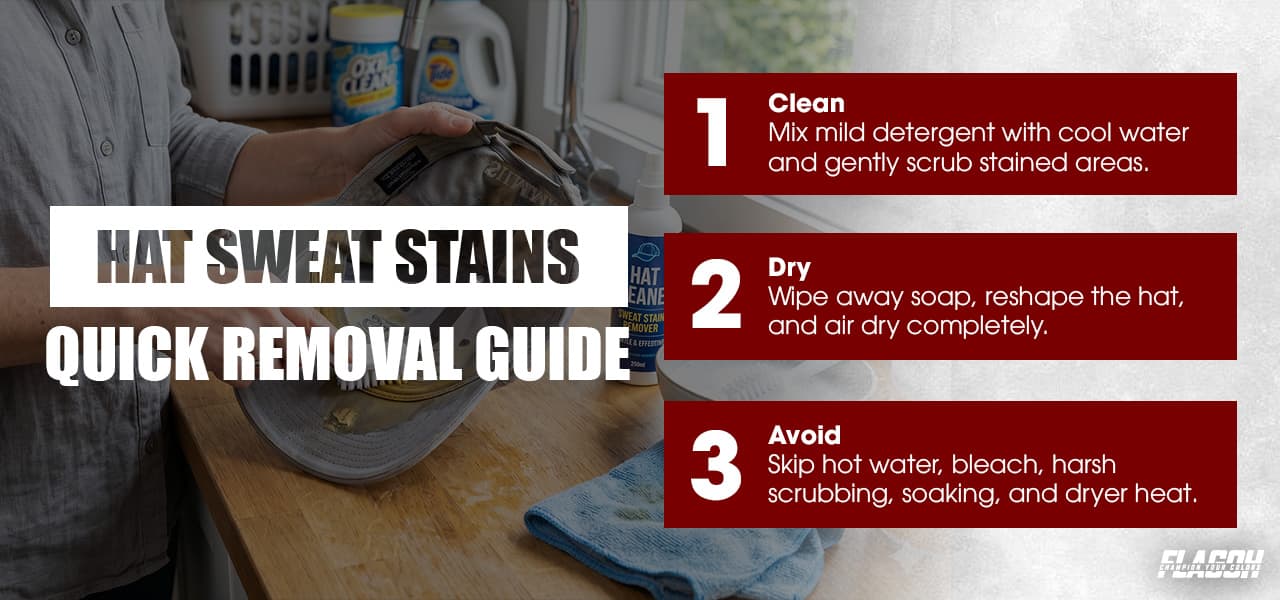
To remove sweat stains from a hat, mix about 1 teaspoon of mild liquid detergent with 1 cup of cool water. Dip a clean cloth or soft brush into the solution, gently clean the sweatband and stained areas, then wipe away soap with a separate damp cloth. Reshape the hat and let it air dry completely.
Avoid hot water, dryer heat, harsh scrubbing, chlorine bleach, and full soaking unless the care label says the hat is washable.
| Hat Stain Type | Best First Step | Best Treatment | What to Avoid |
| Fresh sweat stain | Blot or rinse lightly with cool water | Mild detergent spot clean | Hot water or dryer heat |
| Yellow sweatband stain | Clean the inner band first | Soft brush + detergent solution | Harsh scrubbing |
| Old sweat stain | Repeat gentle spot cleaning | Longer contact time with mild detergent | Expecting one-clean results |
| White hat stain | Spot test first | Mild detergent or oxygen-based treatment if the label allows | Full-strength bleach |
| Colored hat stain | Test on the hidden area | Color-safe mild detergent | Whitening products |
| Baseball cap stain | Spot clean the sweatband and crown | Damp cloth and soft brush | Soaking structured brims |
| Performance hat stain | Rinse sweat-prone areas | Gentle detergent and air dry | Fabric softener or high heat |
Why Hats Get Sweat Stains
Hats are more likely to collect sweat stains than many other accessories because they sit close to the skin for long periods. The sweatband absorbs moisture, body oil, sunscreen, and hair product residue while the outer fabric collects dust and outdoor grime.
This is common with:
- Baseball caps
- Trucker hats
- Dad hats
- Golf hats
- Running caps
- Workout hats
- Team hats
- Tailgate hats
- Outdoor work hats
- Summer game-day caps
A quick wipe may remove surface dirt, but it often does not break down residue trapped inside the sweatband. That is why the inner band usually needs direct cleaning before you treat the outside of the hat.
Why Sweatbands Turn Yellow, Stiff, or Smelly
Sweatband stains usually form when sweat mixes with body oil, sunscreen, hair gel, styling cream, dust, and repeated heat exposure. Over time, that buildup can make the band look yellow, dark, greasy, stiff, or smelly.
Yellowing is most visible on white, light gray, beige, and pastel hats because the stain sits close to the forehead. Fresh stains are usually easier to improve. Older stains may fade after cleaning, but they may not disappear completely if the hat has been worn, dried, and exposed to heat many times.
Why Heat Can Damage Hats
Heat is one of the biggest risks when cleaning hats. A dryer, direct sunlight, hot water, or a hot car can shrink fabric, weaken glue, bend the brim, or change the crown shape.
Avoid using:
- Clothes dryers
- Hair dryers on high heat
- Hot water
- Direct sunlight for long drying
- Ironing
- Steam unless the care label allows it
Air drying is the safest option for most hats.
What to Check Before Cleaning a Hat
Before cleaning sweat stains from a hat, check the material and structure. Not every hat should be soaked or washed the same way.
Read the Care Label First
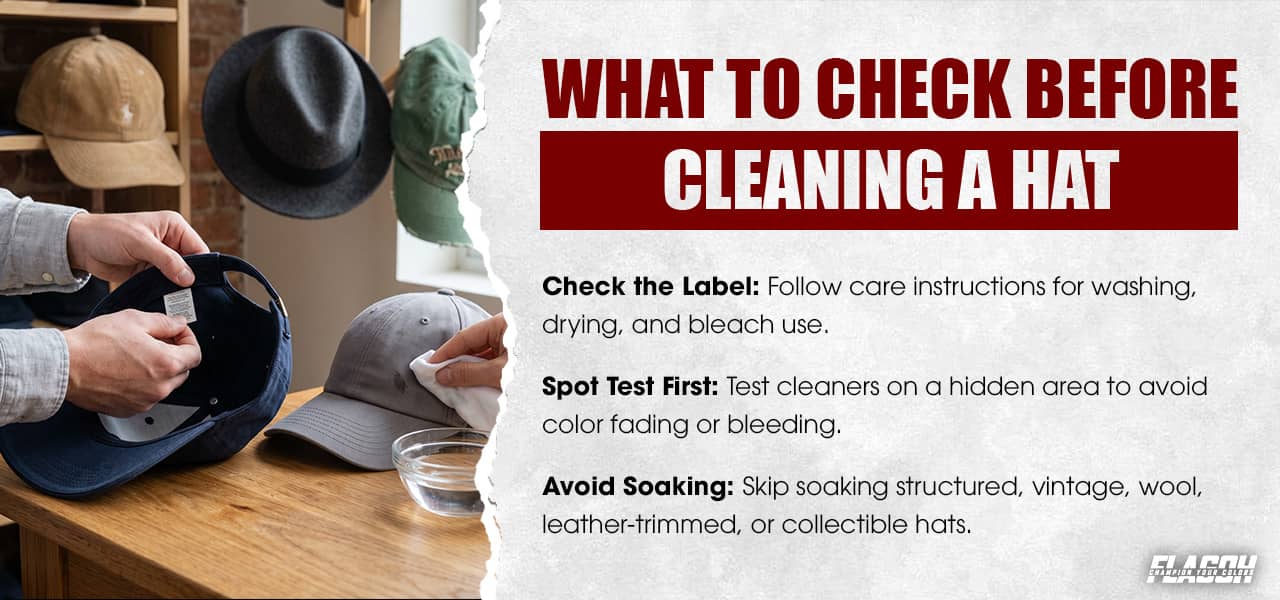
Start with the care label if the hat has one. The label may tell you:
- Whether the hat is washable
- Recommended water temperature
- Whether bleach is allowed
- Whether hand washing is safer
- Whether machine washing should be avoided
- Whether the hat should be air-dried only
If the label says spot clean only, avoid soaking the whole hat. Use a damp cloth and clean only the stained areas, especially around the sweatband and inner brim.
If the hat is vintage, signed, collectible, wool, leather-trimmed, or heavily embroidered, professional cleaning is usually safer than home soaking.
Spot Test Colored Hats and Embroidered Designs
Always spot test before using detergent or stain remover on any colored, embroidered, printed, or patched area.
Test on:
- The inside sweatband
- The underside of the brim
- A hidden seam
- A small back panel
Wait a few minutes. If the color fades, bleeds, or changes, stop and use only a damp cloth or seek professional cleaning.
Spot testing matters for:
- Black hats
- Navy hats
- Bright team-colored hats
- Embroidered logos
- Printed patches
- Vintage caps
- Custom fan hats
Know When Not to Soak a Hat
Some hats can handle a light hand wash, but others should not be soaked.
Be careful with:
- Structured baseball caps
- Older caps with cardboard-style brims
- Leather-trimmed hats
- Wool hats
- Signed or collectible hats
- Hats with fragile patches
- Hats with glued decorations
- Caps with firm front panels
If you are not sure what the brim is made of, choose spot cleaning instead of soaking.
Hat care safety note: Use one cleaning method at a time, follow the care label, and avoid mixing cleaning products. Do not use chlorine bleach on colored hats, embroidered hats, wool hats, printed designs, or vintage caps unless the care label clearly says it is safe.
Step-by-Step Method for Cleaning Hat Sweat Stains
Baseball caps are the most common hats people want to clean. The safest approach is usually spot cleaning first, especially if the cap has a structured crown or firm brim.
Spot Clean the Sweatband
The sweatband is usually the dirtiest part of the hat. Clean it first.
Use this method:
- Mix cool water with a small amount of mild liquid detergent.
- Dip a clean cloth or soft brush into the solution.
- Work gently along the sweatband, especially on yellow, dark, or stiff areas.
- Let the cleaner sit for 5–10 minutes.
- Wipe away soap with a clean, damp cloth.
- Repeat only if the stain still looks heavy after drying.
Do not oversaturate the band. Too much water can affect the shape of the hat, especially if the cap has a firm crown or structured brim.
Clean the Crown and Outer Fabric
For light stains, dab the area with a damp cloth and use detergent only where needed. Work in small sections and avoid hard scrubbing around embroidery, patches, printed graphics, or seams.
For heavier stains, apply a small amount of detergent solution, brush gently in circular motions, and wipe the area with a clean, damp cloth. Repeat only after the hat has dried enough to show whether the stain remains.
Do not twist, wring, or squeeze the hat. This can damage the shape and leave the crown looking uneven.
Reshape and Air Dry the Hat
After cleaning, reshape the hat while it is damp.
You can place it on:
- A clean towel
- A small bowl
- A hat form
- A rounded container
- A balled-up towel inside the crown
Let the hat air dry in a well-ventilated area. Keep it away from direct heat.
Do not wear the hat again until it is fully dry. Wearing a damp hat can trap odor and make the sweatband harder to clean later.
How to Treat Different Hat Materials
Different materials need different levels of care. A cotton dad hat may handle more water than a structured wool cap or an embroidered collectible hat.
Cotton and Canvas Hats
Cotton and canvas hats are usually easier to spot clean. They can often handle mild detergent and gentle brushing.
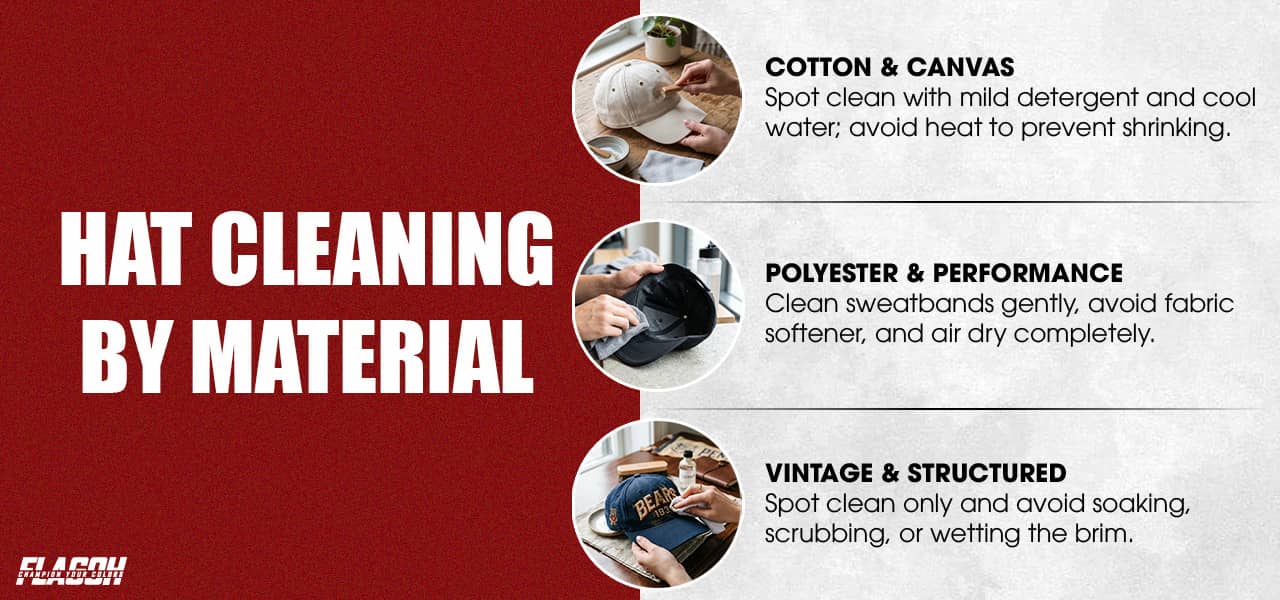
For cotton or canvas hats, use a small amount of gentle detergent, clean only the stained areas, remove leftover soap with a damp cloth, and dry the cap on a rounded form. These fabrics are usually easier to clean than wool or structured caps, but they can still shrink or lose shape if exposed to hot water or dryer heat.
For white cotton hats, you may be able to use an oxygen-based cleaner if the care label allows it. Always spot test first.
Polyester and Performance Hats
Performance hats are often worn for running, golf, gym workouts, hiking, or hot game days, so they can hold odor when sweat, body oil, sunscreen, or detergent residue builds up.
Rinse sweat-prone areas lightly with cool water, then clean the band with a small amount of gentle detergent. Avoid fabric softener because it can leave residue on some performance fabrics and make odors harder to remove. Let the hat dry fully before storing or wearing it again.
Embroidered, Vintage, or Structured Hats
Use the gentlest method possible for embroidered, vintage, signed, or structured hats. Spot clean only, keep the brim as dry as possible, and avoid scrubbing patches, logos, or firm front panels. For signed or collectible caps, professional cleaning or display-only storage may be safer than home cleaning.
How to Remove Old Sweat Stains from Hats
Old sweat stains are harder to remove because the residue has had more time to settle into the fabric. The goal is to fade the stain and improve odor without damaging the brim, crown, stitching, or color.
Start with a Gentle Repeat Treatment
For old stains, do not jump straight to harsh cleaners.
Try this:
- Spot test first.
- Apply a mild detergent solution to the stained sweatband.
- Let it sit for about 10 minutes.
- Brush gently without soaking the brim.
- Wipe away residue with a damp cloth.
- Let the hat dry before repeating.
Several gentle rounds are safer than one harsh cleaning attempt.
Use Oxygen-Based Treatment Only If Safe
For washable white or light-colored hats, an oxygen-based cleaner may help fade yellow sweat stains if the care label allows it. This should be used carefully and only after a spot test.
Use caution:
- Spot test first.
- Do not use on wool unless approved.
- Do not use on leather trim.
- Avoid embroidered areas unless tested.
- Do not soak structured brims.
If the hat has a firm brim or an unknown material, use spot treatment instead of full soaking.
Know When a Stain May Not Fully Come Out
Some hat stains may fade but not disappear completely, especially when sweat, oil, and heat have affected the fabric for a long time.
This is more likely when:
- The hat is old.
- The sweat stain has been there for months.
- The hat has been exposed to heat many times.
- The sweatband is stiff or cracked.
- The fabric has faded around the stain.
- The brim or crown is already misshapen.
In these cases, cleaning can still improve appearance and odor, but the hat may not look brand new again.
How to Prevent Sweat Stains on Hats
Preventing sweat stains is easier than removing old ones. A few simple habits can help your hats last longer.
Let Hats Dry After Wearing
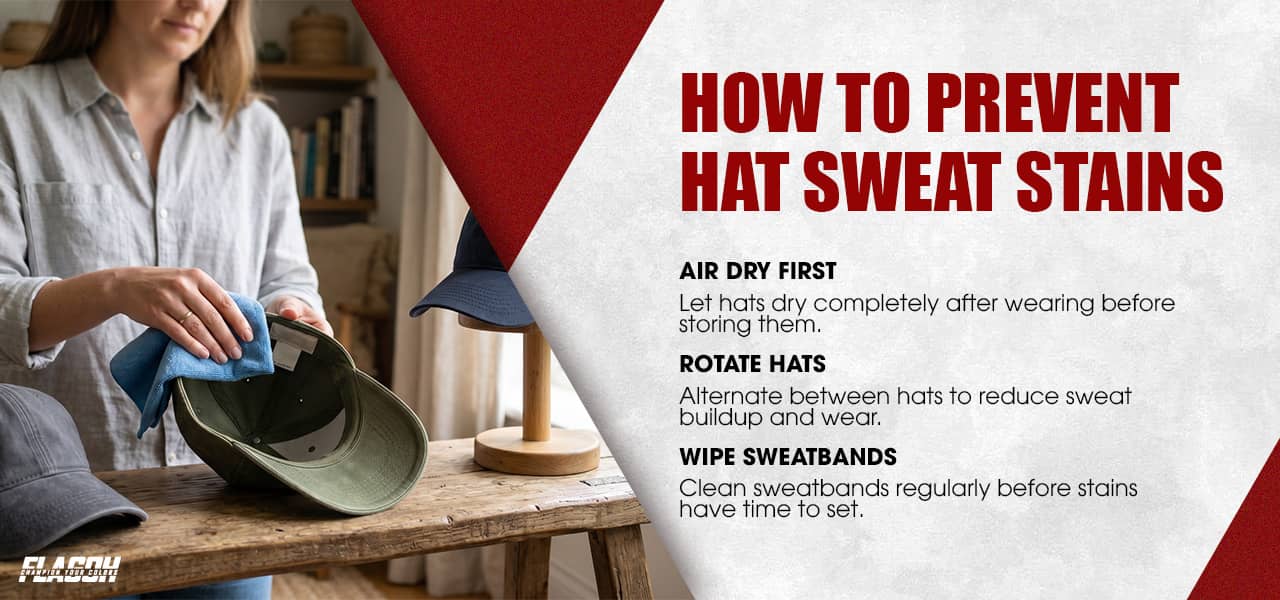
After a hot game, workout, tailgate, or outdoor event, do not throw a sweaty hat straight into a gym bag, closet, or car. Trapped moisture can make the odor worse and cause the sweatband to stiffen.
Instead:
- Let it air out.
- Place it on a clean surface.
- Keep it away from direct heat.
- Let the sweatband dry fully.
- Clean the sweatband before the buildup becomes visible.
This helps reduce odor and stiffness.
Rotate Game-Day Hats
If you wear the same cap every game day, sweat stains build up faster. Rotating two or three hats gives each one time to dry fully between wears and helps preserve team colors, embroidery, and shape.
This is useful for:
- Summer baseball games
- Football tailgates
- Golf rounds
- Outdoor workouts
- Watch parties
- Travel weekends
- Beach or lake trips
For sports fans, rotating hats can also help preserve team-color caps and embroidered designs.
Clean Sweatbands Before Stains Set
You do not need to deep-clean the whole hat every time. A quick sweatband wipe can prevent bigger stains.
After heavy wear:
- Dampen a clean cloth.
- Wipe the sweatband.
- Let the hat air dry.
- Store it only when fully dry.
This small habit can make a big difference, especially for white hats, light-colored caps, and performance hats worn in hot weather.
Mini FAQ
Can old sweat stains be removed from hats?
Yes, many old sweat stains can be improved with gentle spot cleaning, mild detergent, and repeated treatment. However, stains that have been in the fabric for a long time may not disappear completely.
How do I clean a hat without ruining the brim?
Spot clean the sweatband and stained areas instead of soaking the whole hat. Keep the brim as dry as possible, reshape the hat after cleaning, and let it air dry away from heat.
Can I wash a baseball cap in the washing machine?
Some modern caps may be machine washable, but many structured caps are safer to spot clean by hand. Always check the care label first. If you are unsure about the brim or crown structure, avoid machine washing.
Can I use bleach on a white hat?
Only use bleach if the care label clearly allows it. Full-strength bleach can damage fabric, stitching, embroidery, and logos. For washable white hats, a mild oxygen-based treatment may be safer if the label allows it.
How do I remove the sweat smell from hats?
Clean the sweatband with cool water and mild detergent, wipe away soap with a damp cloth, and air dry the hat completely. If odor remains, repeat the process instead of using heat or heavy fragrance sprays.
How often should I clean sweat stains from hats?
Clean the sweatband whenever it starts to feel stiff, smell sweaty, or show visible marks. For hats worn during hot games, workouts, or tailgates, a quick wipe after each heavy wear can help prevent buildup.
Why does my hat still smell after cleaning?
Odor may remain if sweat, body oil, sunscreen, or detergent residue is still trapped in the sweatband. Repeat gentle cleaning, rinse with a damp cloth, and let the hat dry fully before storing it.
Can You Use Baking Soda or Vinegar on Hat Sweat Stains?
Baking soda and vinegar are common home-cleaning suggestions, but they are not always safe for every type of hat. Baking soda paste can be mildly abrasive, and vinegar may affect some dyes, trims, or delicate materials.
If you want to try either option, spot test first on the underside of the brim or inside the sweatband. For most hats, mild detergent and cool water are safer as the first treatment.
Should You Put a Hat in the Dishwasher?
It is usually safer not to clean hats in the dishwasher. Dishwasher heat, strong detergent, and water pressure can affect the brim, crown shape, stitching, and color. If the care label does not clearly say the hat can handle machine washing, use hand spot cleaning instead.
Learning how to remove sweat stains from hats comes down to cleaning gently and protecting the shape. Start with the sweatband, use cool water and mild detergent, wipe away residue, reshape the hat, and let it air dry fully. Avoid hot water, dryer heat, harsh scrubbing, and unnecessary soaking, especially with structured caps or older brims.
Old stains may take more than one treatment and may only fade, but careful cleaning can still improve both appearance and odor. Once your hat is clean for game day, FlagOh sports flags can help complete a porch, fan cave, backyard watch party, or tailgate setup.