
 Arizona Cardinals Flag
 Atlanta Falcons Flag
 Baltimore Ravens Flag
 Buffalo Bills Flag
 Carolina Panthers Flag
 Chicago Bears Flag
 Cincinnati Bengals Flag
 Cleveland Browns Flag
 Dallas Cowboys Flag
 Denver Broncos Flag
 Detroit Lions Flag
 Green Bay Packers Flag
 Houston Texans Flag
 Indianapolis Colts Flag
 Jacksonville Jaguars Flag
 Kansas City Chiefs Flag
 Las Vegas Raiders Flag
 Los Angeles Chargers Flag
 Los Angeles Rams Flag
 Miami Dolphins Flag
 Minnesota Vikings Flag
 New England Patriots Flag
 New Orleans Saints Flag
 New York Giants Flag
 New York Jets Flag
 Philadelphia Eagles Flag
 Pittsburgh Steelers Flag
 San Francisco 49ers Flag
 Seattle Seahawks Flag
 Tampa Bay Buccaneers Flag
 Tennessee Titans Flag
 Washington Commanders Flag
 Arizona Diamondbacks Flag
 Atlanta Braves Flag
 Baltimore Orioles Flag
 Boston Red Sox Flag
 Chicago Cubs Flag
 Chicago White Sox Flag
 Cincinnati Reds Flag
 Cleveland Guardians Flag
 Colorado Rockies Flag
 Detroit Tigers Flag
 Houston Astros Flag
 Kansas City Royals Flag
 Los Angeles Angels Flag
 Los Angeles Dodgers Flag
 Miami Marlins Flag
 Milwaukee Brewers Flag
 Minnesota Twins Flag
 New York Mets Flag
 New York Yankees Flag
 Oakland Athletics Flag
 Philadelphia Phillies Flag
 Pittsburgh Pirates Flag
 San Diego Padres Flag
 San Francisco Giants Flag
 Seattle Mariners Flag
 St. Louis Cardinals Flag
 Tampa Bay Rays Flag
 Texas Rangers Flag
 Toronto Blue Jays Flag
 Washington Nationals Flag
 Atlanta Hawks Flag
 Boston Celtics Flag
 Brooklyn Nets Flag
 Charlotte Hornets Flag
 Chicago Bulls Flag
 Cleveland Cavaliers Flag
 Dallas Mavericks Flag
 Denver Nuggets Flag
 Detroit Pistons Flag
 Golden State Warriors Flag
 Houston Rockets Flag
 Indiana Pacers Flag
 LA Clippers Flag
 Los Angeles Lakers Flag
 Memphis Grizzlies Flag
 Miami Heat Flag
 Milwaukee Bucks Flag
 Minnesota Timberwolves Flag
 New Orleans Pelicans Flag
 New York Knicks Flag
 Oklahoma City Thunder Flag
 Orlando Magic Flag
 Philadelphia 76ers Flag
 Phoenix Suns Flag
 Portland Trail Blazers Flag
 Sacramento Kings Flag
 San Antonio Spurs Flag
 Toronto Raptors Flag
 Utah Jazz Flag
 Washington Wizards Flag
 Anaheim Ducks Flag
 Arizona Coyotes Flag
 Boston Bruins Flag
 Buffalo Sabres Flag
 Calgary Flames Flag
 Carolina Hurricanes Flag
 Chicago Blackhawks Flag
 Colorado Avalanche Flag
 Columbus Blue Jackets Flag
 Dallas Stars Flag
 Detroit Red Wings Flag
 Edmonton Oilers Flag
 Florida Panthers Flag
 Los Angeles Kings Flag
 Minnesota Wild Flag
 Montreal Canadiens Flag
 Nashville Predators Flag
 New Jersey Devils Flag
 New York Islanders Flag
 New York Rangers Flag
 Ottawa Senators Flag
 Philadelphia Flyers Flag
 Pittsburgh Penguins Flag
 San Jose Sharks Flag
 Seattle Kraken Flag
 St. Louis Blues Flag
 Tampa Bay Lightning Flag
 Toronto Maple Leafs Flag
 Vancouver Canucks Flag
 Vegas Golden Knights Flag
 Washington Capitals Flag
 Winnipeg Jets Flag
Sports Hats & Cap Guides
How to Measure Your Head for a Hat: Size Guide and Fit Tips
Knowing how to measure your head for a hat helps you avoid guesswork and choose a size that feels right from the start. The process is simple, but small mistakes in tape placement or tension can lead to a poor fit. In this guide, FlagOh explains how to measure accurately, how to convert your result into a hat size, and how to decide what to do if you fall between sizes.
How to Measure Your Head Accurately for the Right Hat Size
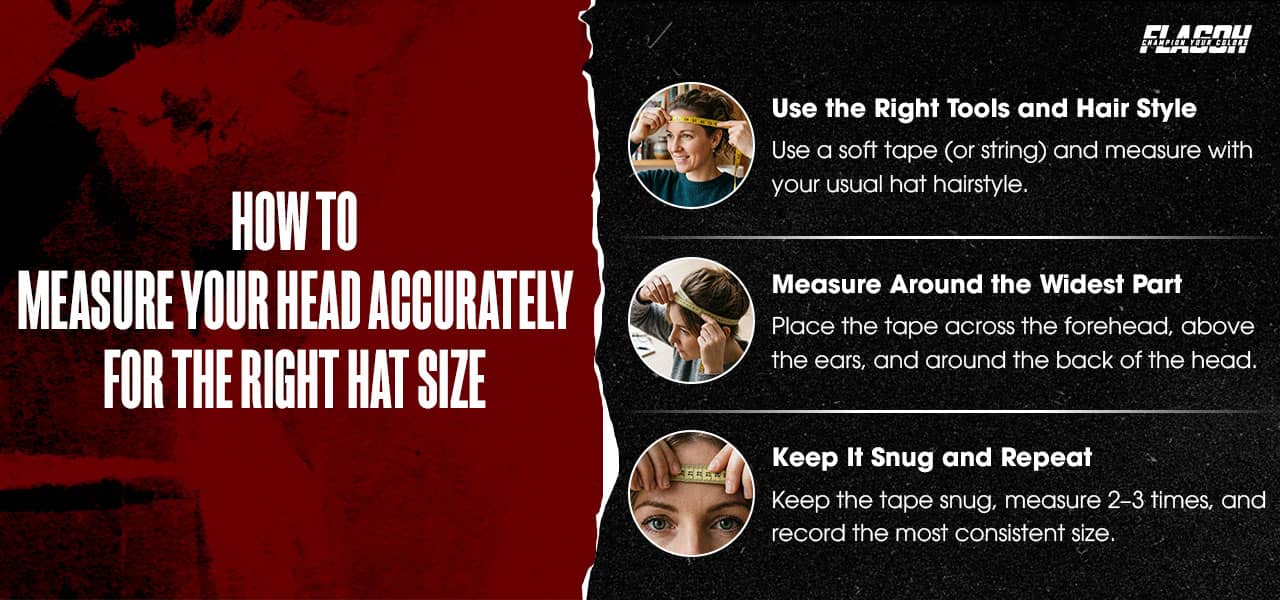
Getting the right hat size starts with one simple step: taking a measurement you can trust. Before you compare size charts or choose a style, it helps to know your actual head circumference first.
What You Need Before You Measure
The best tool is a soft measuring tape, like the flexible kind used for clothing. If you do not have one, you can still measure with a piece of string and a ruler. A mirror helps, and another person can make the process more accurate.
Before you measure, think about how you normally wear your hair with a hat. If you usually wear thick curls down, keep them that way. If you flatten your hair, tie it back, or wear braids differently under a cap, measure in the same way you plan to wear the hat. Small differences in hair volume can change fit more than many people expect.
Where to Place the Tape
Place the tape around the widest part of your head. For most people, that means:
- across the middle of the forehead
- just above the ears
- around the fuller part at the back of the head
Try to keep the tape level all the way around. If it rises too high or drops too low, the result may be inaccurate. That often leads to a hat that feels wrong even when the chart says it should fit.
When people ask how to measure your head for a hat, this is usually the step that matters most. Good tape placement gives you a number you can actually trust.
How Tight the Tape Should Feel
The tape should feel snug, not tight. It should rest against your head without squeezing. Think about how you want the hat to feel during normal wear. You want a close fit, but not one that creates pressure.
A good rule is to measure for comfort, not compression. If you pull too tightly, you may buy a hat that feels fine for a few seconds but is annoying after twenty minutes. If you hold the tape too loosely, you may end up with a hat that slips or shifts too much.
Measure 2 to 3 times and use the most consistent result. Record it in both inches and centimeters if possible. That makes it easier to compare size charts across different brands and styles.
How to Convert Your Measurement Into the Right Hat Size
Once you know your head circumference, the next step is turning that number into a hat size you can actually shop by. A general chart is a good starting point, but fitted hats often require more precise size conversions than adjustable or stretch-fit styles.
Hat Size Chart in Inches and Centimeters
Use the chart below as a general guide. It works well for many casual hats, sports caps, and everyday styles, but you should still check the product-specific chart if one is available.
| Head Circumference (inches) | Head Circumference (cm) | General Size | Common Fit Type |
| 21 1/8 – 21 1/2 | 53.5 – 54.5 | Small | fitted / adjustable |
| 21 7/8 – 22 1/4 | 55.5 – 56.5 | Medium | fitted / snapback |
| 22 5/8 – 23 | 57.5 – 58.5 | Large | fitted / trucker |
| 23 1/2 – 23 7/8 | 59.5 – 60.5 | XL | fitted / stretch-fit |
| 24 1/4 and up | 61.5 and up | XXL+ | large-size options |
This kind of table helps you go from a raw measurement to a practical size range quickly.
After measuring your head, you can use that number as a simple filter when browsing all MLB teams hats, especially if you are comparing fitted, adjustable, or snapback styles by club.
How to Read a Fitted Hat Size Chart
If you are shopping for fitted hats, a general S–XL chart may not be enough. Many fitted styles use more precise size increments, so it helps to compare your measurement with the exact product chart before buying. If you fall between two sizes, sizing up is often the safer option for structured hats.
Letter Sizes, Fitted Sizes, and Adjustable Hats
Hat sizing may appear in different forms depending on the product:
- Letter sizes like S, M, L, and XL
- Fitted sizes are used for more exact sizing
- Adjustable or one-size styles that allow some flexibility
- Stretch-fit styles that cover a range rather than one exact number
Fitted hats usually require the most precise measurement. Adjustable hats are more forgiving, which makes them easier for gifting or for buyers who are unsure about fit. Stretch-fit hats can be comfortable, but the feel still depends on crown shape and material.
Why Size Charts Can Vary by Brand
Even if two hats look similar, they may not fit the same way. Crown depth, structure, sweatband thickness, and closure style can all affect how a hat feels. A size large in one brand may feel slightly roomier or more exact than a size large in another.
That is why the best process is simple:
- Measure your head correctly
- Use a general size chart as a starting point
- Compare your number to the product-specific chart whenever possible
If you are browsing different sports cap styles, this step can help you shop with more confidence and less trial and error. Once you know your measurement, it is easier to choose a cap by team without guessing between different colors, crown shapes, and everyday fan styles.
How a Hat Should Feel Once You Have the Right Size
A good measurement helps, but the final test is still how the hat feels when you actually wear it.
How Fitted Hats Should Feel
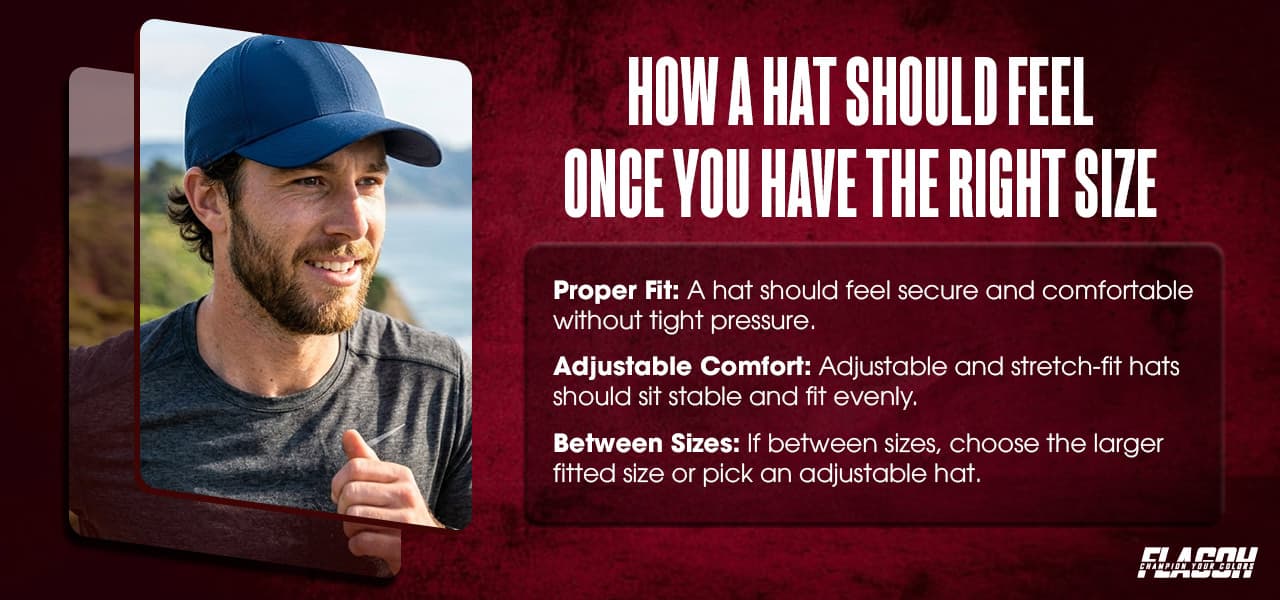
A fitted hat should feel secure and balanced without creating pain. It should sit cleanly around your head, stay in place during normal movement, and avoid strong pressure on the forehead or temples.
A well-fitted hat should:
- stay in place without constant adjusting
- feel close to the head without pinching
- avoid leaving deep pressure marks after short wear
- feel wearable beyond just the first few minutes
If the fit feels distracting or uncomfortable quickly, it is probably too tight.
How Adjustable and Stretch-Fit Hats Should Fit
Adjustable hats and stretch-fit styles give you more flexibility. That makes them popular for casual wear, gifts, and buyers who fall between sizes.
A snapback or adjustable cap should feel stable without wobbling. It should not sit too loose at the sides, and it should not create a large empty gap above the brow line. A stretch-fit hat should hug the head evenly, without pressing hard in one area while feeling loose in another.
What to Do If You Are Between Sizes
If your measurement falls between two sizes, the best option depends on the hat style.
For fitted hats, sizing up is often safer if you prefer comfort or if your hair adds a little extra volume. For adjustable hats, the exact number matters less because you can fine-tune the closure.
A few simple rules help:
- Choose the larger size if you are between sizes in a structured fitted hat
- Choose adjustable hats if you want more flexibility
- Pay attention to crown depth, not just circumference
- Consider how your hair changes the fit
After checking your size range, browse MLB hats to compare fitted, adjustable, snapback, and everyday cap options that match your comfort needs.
Special Cases That Can Change Your Hat Size
Not every buyer fits the average chart in the same way. A few situations deserve extra attention.
How to Measure Without a Tape Measure
If you do not have a soft tape measure, use a non-stretch string, ribbon, or paper strip. Wrap it around your head in the same position, mark the overlap point, then lay it flat and measure it with a ruler.
This method works well for most casual purchases, but it only works if the material does not stretch. Avoid elastic cords or anything that bends unevenly.
Thick Hair, Braids, and Curly Hair
Hair volume can change the way a hat fits. If you wear your hair down under a cap, measure that way. If you usually flatten it or tie it back before putting on a hat, measure in that same style.
For thick hair, braids, or curls:
- Measure in your normal wearing style
- Do not flatten the hair more than you realistically would
- Leave a little room if your hair shape changes often
Kids, Gifts, and Hard-to-Fit Head Sizes
For kids, circumference matters more than age. Two children of the same age can need very different hat sizes. Always measure when you can.
For gifts, adjustable hats are usually the safest option if you do not know the exact size. They reduce the risk of buying something too tight or too loose.
For very small or very large head sizes, the chart still helps, but product-specific fit notes become even more important. Crown depth and overall hat shape can matter just as much as the measurement itself.
FAQ About Measuring Your Head for a Hat
Even a good-sized chart cannot fix a poor measurement. These are some of the most common mistakes.
Measuring Too High or Too Low
If the tape sits too high, the measurement may come out too small. If it sits too low, it may come out too large. Keep the tape level across the mid-forehead and just above the ears for the best result.
Pulling the Tape Too Tight
This is one of the biggest mistakes people make. A tighter number may seem more precise, but it often leads to a hat that feels uncomfortable in real wear. Measure for realistic comfort, not for the smallest possible number.
Using an Old Hat Instead of Measuring Your Head
Do not rely on the inner band of an old hat as your main size reference. Materials can stretch, shrink, soften, and change shape with use. Sweatbands also wear down over time. Your own head measurement is a more reliable starting point.
Common Questions About Measuring Your Head for a Hat
How do I measure my head for a hat correctly?
Measure around the widest part of your head, usually across the mid-forehead and just above the ears, then compare that number with a hat size chart.
Can I measure my head for a hat without a tape measure?
Yes. A non-stretch string and a ruler will usually give you an accurate enough measurement for most hat purchases.
How do I determine hat size from my measurement?
Compare your head circumference in inches or centimeters with a size chart, then check the product-specific sizing if it is available.
Should I size up or down if I am between hat sizes?
For most fitted hats, sizing up is usually the safer choice. If you want more flexibility, an adjustable hat is often easier to manage.
How should a fitted hat fit after measuring?
A fitted hat should feel secure and balanced without sliding around or creating strong pressure on the forehead or temples.
Is hat sizing the same across all brands?
No. General charts are useful, but fit can vary because of crown shape, structure, materials, sweatband design, and closure type.
Once you know how to measure your head for a hat, it becomes much easier to compare sizes and shop with more confidence. Use your measurement as a starting point, then check the size chart, fit type, and product details before buying. If you are choosing between fitted, adjustable, or stretch-fit styles, FlagOh makes it easier to find a hat that matches both your size and your comfort preference.