
 Arizona Cardinals Flag
 Atlanta Falcons Flag
 Baltimore Ravens Flag
 Buffalo Bills Flag
 Carolina Panthers Flag
 Chicago Bears Flag
 Cincinnati Bengals Flag
 Cleveland Browns Flag
 Dallas Cowboys Flag
 Denver Broncos Flag
 Detroit Lions Flag
 Green Bay Packers Flag
 Houston Texans Flag
 Indianapolis Colts Flag
 Jacksonville Jaguars Flag
 Kansas City Chiefs Flag
 Las Vegas Raiders Flag
 Los Angeles Chargers Flag
 Los Angeles Rams Flag
 Miami Dolphins Flag
 Minnesota Vikings Flag
 New England Patriots Flag
 New Orleans Saints Flag
 New York Giants Flag
 New York Jets Flag
 Philadelphia Eagles Flag
 Pittsburgh Steelers Flag
 San Francisco 49ers Flag
 Seattle Seahawks Flag
 Tampa Bay Buccaneers Flag
 Tennessee Titans Flag
 Washington Commanders Flag
 Arizona Diamondbacks Flag
 Atlanta Braves Flag
 Baltimore Orioles Flag
 Boston Red Sox Flag
 Chicago Cubs Flag
 Chicago White Sox Flag
 Cincinnati Reds Flag
 Cleveland Guardians Flag
 Colorado Rockies Flag
 Detroit Tigers Flag
 Houston Astros Flag
 Kansas City Royals Flag
 Los Angeles Angels Flag
 Los Angeles Dodgers Flag
 Miami Marlins Flag
 Milwaukee Brewers Flag
 Minnesota Twins Flag
 New York Mets Flag
 New York Yankees Flag
 Oakland Athletics Flag
 Philadelphia Phillies Flag
 Pittsburgh Pirates Flag
 San Diego Padres Flag
 San Francisco Giants Flag
 Seattle Mariners Flag
 St. Louis Cardinals Flag
 Tampa Bay Rays Flag
 Texas Rangers Flag
 Toronto Blue Jays Flag
 Washington Nationals Flag
 Atlanta Hawks Flag
 Boston Celtics Flag
 Brooklyn Nets Flag
 Charlotte Hornets Flag
 Chicago Bulls Flag
 Cleveland Cavaliers Flag
 Dallas Mavericks Flag
 Denver Nuggets Flag
 Detroit Pistons Flag
 Golden State Warriors Flag
 Houston Rockets Flag
 Indiana Pacers Flag
 LA Clippers Flag
 Los Angeles Lakers Flag
 Memphis Grizzlies Flag
 Miami Heat Flag
 Milwaukee Bucks Flag
 Minnesota Timberwolves Flag
 New Orleans Pelicans Flag
 New York Knicks Flag
 Oklahoma City Thunder Flag
 Orlando Magic Flag
 Philadelphia 76ers Flag
 Phoenix Suns Flag
 Portland Trail Blazers Flag
 Sacramento Kings Flag
 San Antonio Spurs Flag
 Toronto Raptors Flag
 Utah Jazz Flag
 Washington Wizards Flag
 Anaheim Ducks Flag
 Arizona Coyotes Flag
 Boston Bruins Flag
 Buffalo Sabres Flag
 Calgary Flames Flag
 Carolina Hurricanes Flag
 Chicago Blackhawks Flag
 Colorado Avalanche Flag
 Columbus Blue Jackets Flag
 Dallas Stars Flag
 Detroit Red Wings Flag
 Edmonton Oilers Flag
 Florida Panthers Flag
 Los Angeles Kings Flag
 Minnesota Wild Flag
 Montreal Canadiens Flag
 Nashville Predators Flag
 New Jersey Devils Flag
 New York Islanders Flag
 New York Rangers Flag
 Ottawa Senators Flag
 Philadelphia Flyers Flag
 Pittsburgh Penguins Flag
 San Jose Sharks Flag
 Seattle Kraken Flag
 St. Louis Blues Flag
 Tampa Bay Lightning Flag
 Toronto Maple Leafs Flag
 Vancouver Canucks Flag
 Vegas Golden Knights Flag
 Washington Capitals Flag
 Winnipeg Jets Flag
News
How to Clean White Baseball Pants the Right Way in 4 Steps
Every baseball season, parents face the same impossible enemy: white pants covered in years of red clay, green grass, and pine tar. A standard wash cycle just won’t cut it. At FlagOh, we know that a clean uniform reflects pride in the game. That’s why we’ve compiled this professional, step-by-step guide on how to clean white baseball pants sparkling clean, tackling even those 10-year-old rust stains. Get ready to ditch the frustration and learn the proven techniques that win the laundry battle, game after game.
Pretreatment for Each Type of Dirt
The true secret to how to clean white baseball pants lies in chemical pretreatment. At FlagOh, we know dirt is complex—a mix of rust, fat, and organic matter. Before the wash cycle, you must match the right chemical “weapon” to the specific stain to neutralize it completely.
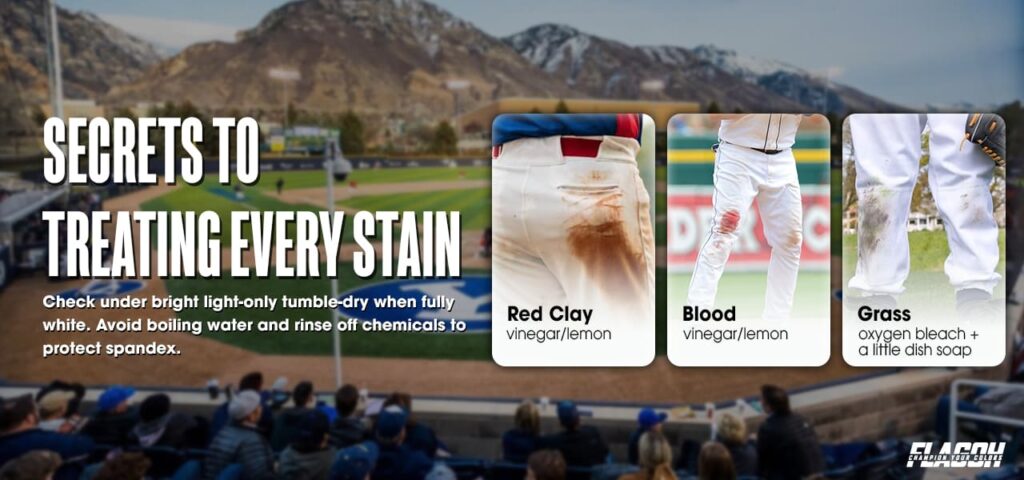
The Rust Rule
The toughest stain is often red clay or highly pigmented dirt. This color isn’t simple dirt; it’s iron oxide (rust). You cannot remove it with laundry soap alone; you must dissolve the iron particles first.
Actionable Steps for Red Clay:
- Use an Acid: The chemical key is acid. The 3 effective and safe acidic agents are:
- White Vinegar: Apply directly to the stain and let sit for 15 minutes.
- Lemon Juice and Salt: The salt acts as a gentle abrasive while the lemon juice provides the acid.
- Commercial Rust Remover: Use sparingly and follow label instructions, as this is the most aggressive option.
- Scrub Lightly: Use an old toothbrush or a stiff laundry brush to work the acid into the stain.
- Rinse and Repeat: Rinse the acidic cleaner out before moving to the next stage.
The Grass & Blood
Organic stains like grass and blood (protein/chlorophyll) require a different approach.
- Protein Stains (Blood): Must be treated with cold water and an enzyme-based stain remover. Heat sets the protein, making it permanent. Apply the enzyme product directly and let it dwell for at least 30 minutes.
- Grass Stains: These stains respond well to oxygen bleach (typically sodium percarbonate, which releases hydrogen peroxide in water) and specialized degreasing solutions. In water, sodium percarbonate releases hydrogen peroxide and washing soda, lifting organic stains while being safe for spandex when used as directed. Apply a small amount of dish soap to cut the chlorophyll, followed by an oxygen-based brightener (like OxiClean), and let it sit.
The Fels-Naptha Method
Fels-Naptha laundry soap is a legendary, low-cost secret weapon against athletic stains.
- Scrubbing Method (Spot Treatment): Wet the stain, rub the Fels-Naptha bar directly onto the area until a thick, gooey paste forms. Use a brush to work it in aggressively.
- Whole-Garment Soap Soak (High-Alkali): If the entire pair is grayed or covered in multiple stains, grate 1/4 bar of Fels-Naptha into a large bucket of hot water and agitate until dissolved. This creates a powerful, high-alkaline soaking solution
Soak Right to Deep-Clean Stubborn Stains
Pretreating is complete, but the real secret to how to clean white baseball pants is the pre-soak. This critical step allows your chemicals to penetrate the synthetic fibers, dissolving the deep grime a machine wash can never reach.
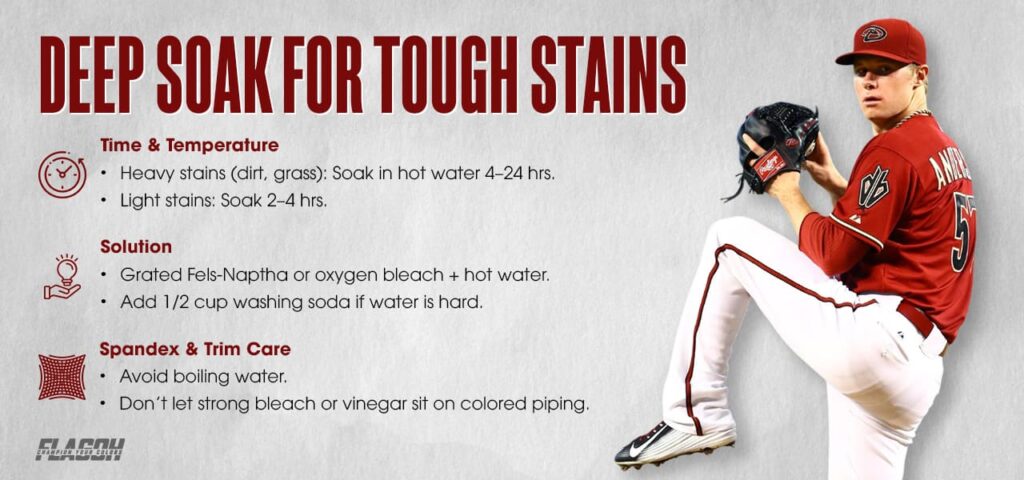
How Long to Soak and at What Temperature
Your goal is to allow the chemical reaction to complete its work.
- Deep Dirt & Grass: Soak the pants in hot water (as hot as your hand can stand) for a minimum of 4 hours, up to 24 hours.
- Mild Staining or Pre-Treated Clay: A 2 to 4-hour soak is usually sufficient.
- Solution: Use the Fels-Naptha grating technique, or add a generous scoop of oxygen bleach powder to your soaking water. Ensure the pants are fully submerged and weigh them down if necessary.
Hard Water & Yellowing Fix:
If you have hard water, add ½ cup of washing soda with your oxygen bleach (sodium percarbonate) and run an extra rinse. This reduces mineral-induced yellowing and residue on polyester/spandex.
How to Protect Spandex and Piping
Most modern baseball pants contain Spandex (elastane) for stretch and comfort. While you need hot water for cleaning, excessive heat and chemicals can degrade these synthetic fibers.
- Avoid Boiling Water: Stick to the hottest tap water available, but don’t boil it, as this can weaken the Spandex over time.
- Monitor Piping/Trim: Ensure strong acids (like undiluted vinegar) or chlorine bleach don’t sit on colored piping for too long, as they can cause fading or degradation of the synthetic trim. Always rinse off strong spot treatments before soaking.
Washer Settings to Prevent Yellowing
The wash cycle is the final step in how to clean baseball pants. After the pre-soak, set your machine correctly to rinse away the dissolved grime and powerful chemicals, preventing that frustrating yellowish residue. Pro note from the FlagOh care team: After long alkaline soaks, run an extra rinse to purge residual alkalinity/minerals and prevent yellowing.
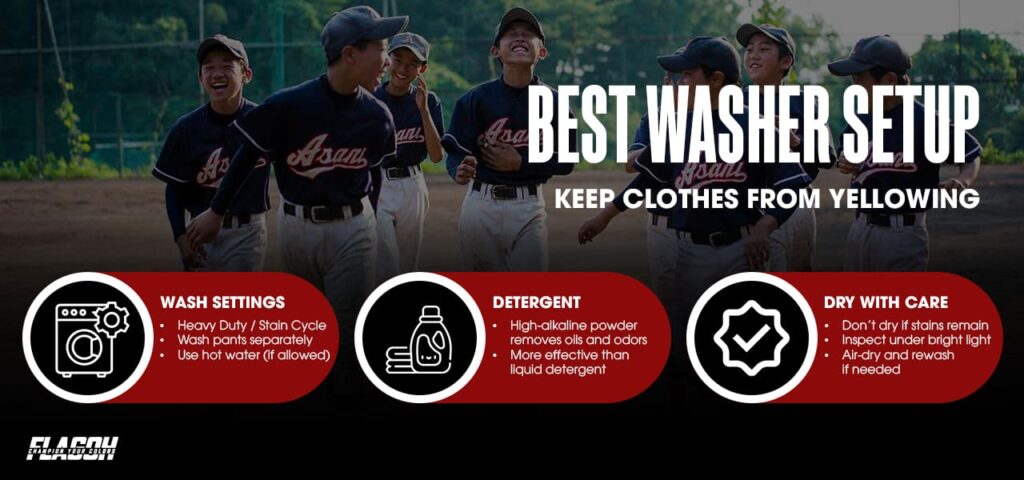
Best Washer Settings for a Deeper Clean
- Cycle: Use a Heavy Duty or Stain Cycle. You need maximum agitation and rinse time.
- Load Size: Wash the pants ALONE. Do not dilute the detergent’s power by washing them with other clothing.
- Temperature: Use Hot Water (unless care tags prohibit it). Hot water is necessary to suspend the remaining dirt particles and fully dissolve powerful detergents.
Why Powder Detergent Works Better on Synthetics
Athletic wear accumulates oils (from sweat and sliding) that traditional liquid detergents sometimes struggle to lift completely. Choose a high-alkaline powdered detergent that often has a higher pH (more alkaline, meaning it’s stronger) than liquids, making them far superior for cutting through dirt and removing the buildup that causes that persistent grayish/yellow tinge on white synthetics.
Check for Stains Before Drying
This is the most critical rule in the laundry process: Never put a stained garment into the dryer.
- The Inspection: Immediately after the wash cycle finishes, take the pants out and inspect them closely under bright light. If any hint of a stain remains (clay, grass, or graying).
- Why to Skip the Dryer: The heat from the dryer permanently “bakes” any remaining organic or chemical residue into the synthetic fibers, making removal virtually impossible later. If they aren’t 100% white, air-dry them and repeat the pre-treatment.
Troubleshooting and Stain Remover Guide
Even the best-laid plans need backup. You’ve worked hard on how to clean white baseball pants, but sometimes stains are just stubborn. At FlagOh, we know preparation is key. This section provides quick, expert troubleshooting and a simple guide to ensure you’re always using the right chemical for the job.
How to Use a Pressure Washer Safely:
In locker rooms and on the field, some people resort to using a pressure washer on pants before the wash. While it’s effective, it is high-risk.
- Technique: Use a 40° (or wider) fan tip at low pressure.
- Distance: Hold the nozzle at least 12 to 18 inches (30 to 45 cm) away from the fabric.
- Safety Warnings: Using a jet tip or holding it too close will immediately shred the polyester fabric and separate the seams. Use this technique only for mud-caked garments and with extreme caution.
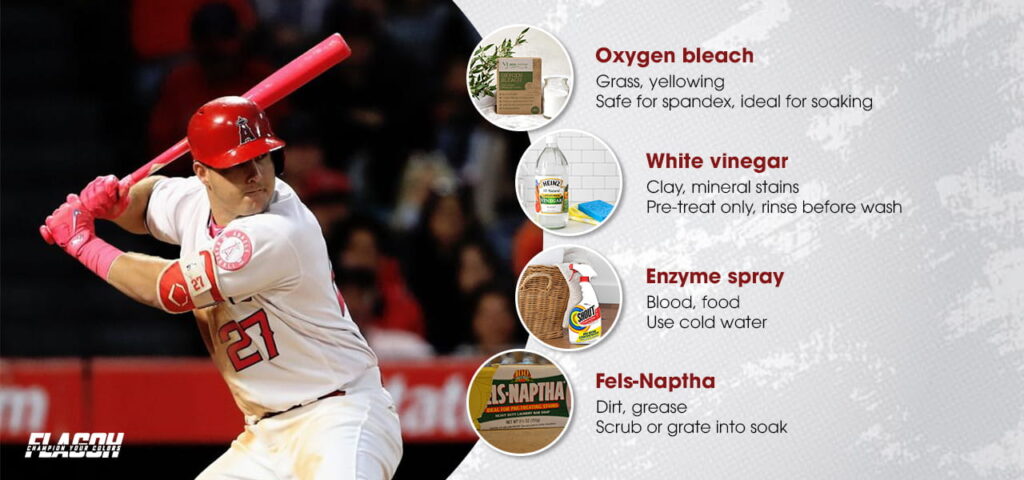
Stain Remover Comparison Guide:
| Remover | Best For | Mechanism | Notes/Safety |
| Oxygen bleach (sodium percarbonate) | Grass, general yellowing | Releases H₂O₂ + washing soda to lift stains | Safe for spandex/piping; ideal for soaking |
| White vinegar | Red clay, hard-water marks | Mild acid helps dissolve iron oxide | Pre-treat only; rinse before wash |
| Enzyme spray (Max Force/Shout) | Blood, food (protein) | Enzymes break down proteins in cold water | Keep water cold to avoid setting protein |
| Fels-Naptha bar | Heavy dirt/grease | High alkalinity + surfactants cut grime | Spot scrub or grate for soak solution |
Quick Answers for Last-minute Checks
You’ve nearly finished the process of how to get white baseball pants clean. Before you declare victory, here are quick answers to the most common last-minute questions and mistakes that could sabotage your hard work. Don’t skip these final checks!
What is the most common mistake parents make when washing pants?
The most common mistake is drying the pants before the stain is 100% gone. Heat sets stains permanently, turning a potentially removable grass stain into a permanent, faded yellow-green patch. Always air dry until you are certain the stain is gone.
How do I remove sticky residue from pine tar or sunscreen?
Treat these with a degreaser. Apply a small amount of dish soap (like Dawn) directly to the sticky area and let it sit for 15 minutes to break down and emulsify the sticky oils before scrubbing and washing. For very stubborn pine tar, a small amount of mineral spirits or WD-40 can be used as a last resort, but must be fully rinsed out afterward. Safety note: wear gloves, work in a ventilated area, keep away from heat/flame, spot-test first, and launder twice to remove solvent residue.
Can I use chlorine bleach on my white baseball pants?
You should avoid chlorine bleach. While it whitens cotton well, it can actually react poorly with the synthetic fibers (polyester, nylon) commonly used in baseball uniforms, sometimes causing them to turn a permanent yellow or gray color. Stick to high-alkaline powdered detergent and oxygen bleach (like OxiClean) for superior whitening without the risk.
So, you’ve officially mastered how to clean white baseball pants! It turns out the secret isn’t magic, but a methodical approach using the right chemistry and strategy. Always remember the four core rules: Pretreat the specific stain, Soak properly, Wash hot, and Veto the Dryer. By following these proven steps, you ensure that your player’s uniform stays brilliant white, game after game. A crisp, clean uniform always stands out, reflecting the same commitment to quality and pride that we champion here at FlagOh. Say goodbye to dull, gray uniforms and hello to sparkling white!