
 Arizona Cardinals Flag
 Atlanta Falcons Flag
 Baltimore Ravens Flag
 Buffalo Bills Flag
 Carolina Panthers Flag
 Chicago Bears Flag
 Cincinnati Bengals Flag
 Cleveland Browns Flag
 Dallas Cowboys Flag
 Denver Broncos Flag
 Detroit Lions Flag
 Green Bay Packers Flag
 Houston Texans Flag
 Indianapolis Colts Flag
 Jacksonville Jaguars Flag
 Kansas City Chiefs Flag
 Las Vegas Raiders Flag
 Los Angeles Chargers Flag
 Los Angeles Rams Flag
 Miami Dolphins Flag
 Minnesota Vikings Flag
 New England Patriots Flag
 New Orleans Saints Flag
 New York Giants Flag
 New York Jets Flag
 Philadelphia Eagles Flag
 Pittsburgh Steelers Flag
 San Francisco 49ers Flag
 Seattle Seahawks Flag
 Tampa Bay Buccaneers Flag
 Tennessee Titans Flag
 Washington Commanders Flag
 Arizona Diamondbacks Flag
 Atlanta Braves Flag
 Baltimore Orioles Flag
 Boston Red Sox Flag
 Chicago Cubs Flag
 Chicago White Sox Flag
 Cincinnati Reds Flag
 Cleveland Guardians Flag
 Colorado Rockies Flag
 Detroit Tigers Flag
 Houston Astros Flag
 Kansas City Royals Flag
 Los Angeles Angels Flag
 Los Angeles Dodgers Flag
 Miami Marlins Flag
 Milwaukee Brewers Flag
 Minnesota Twins Flag
 New York Mets Flag
 New York Yankees Flag
 Oakland Athletics Flag
 Philadelphia Phillies Flag
 Pittsburgh Pirates Flag
 San Diego Padres Flag
 San Francisco Giants Flag
 Seattle Mariners Flag
 St. Louis Cardinals Flag
 Tampa Bay Rays Flag
 Texas Rangers Flag
 Toronto Blue Jays Flag
 Washington Nationals Flag
 Atlanta Hawks Flag
 Boston Celtics Flag
 Brooklyn Nets Flag
 Charlotte Hornets Flag
 Chicago Bulls Flag
 Cleveland Cavaliers Flag
 Dallas Mavericks Flag
 Denver Nuggets Flag
 Detroit Pistons Flag
 Golden State Warriors Flag
 Houston Rockets Flag
 Indiana Pacers Flag
 LA Clippers Flag
 Los Angeles Lakers Flag
 Memphis Grizzlies Flag
 Miami Heat Flag
 Milwaukee Bucks Flag
 Minnesota Timberwolves Flag
 New Orleans Pelicans Flag
 New York Knicks Flag
 Oklahoma City Thunder Flag
 Orlando Magic Flag
 Philadelphia 76ers Flag
 Phoenix Suns Flag
 Portland Trail Blazers Flag
 Sacramento Kings Flag
 San Antonio Spurs Flag
 Toronto Raptors Flag
 Utah Jazz Flag
 Washington Wizards Flag
 Anaheim Ducks Flag
 Arizona Coyotes Flag
 Boston Bruins Flag
 Buffalo Sabres Flag
 Calgary Flames Flag
 Carolina Hurricanes Flag
 Chicago Blackhawks Flag
 Colorado Avalanche Flag
 Columbus Blue Jackets Flag
 Dallas Stars Flag
 Detroit Red Wings Flag
 Edmonton Oilers Flag
 Florida Panthers Flag
 Los Angeles Kings Flag
 Minnesota Wild Flag
 Montreal Canadiens Flag
 Nashville Predators Flag
 New Jersey Devils Flag
 New York Islanders Flag
 New York Rangers Flag
 Ottawa Senators Flag
 Philadelphia Flyers Flag
 Pittsburgh Penguins Flag
 San Jose Sharks Flag
 Seattle Kraken Flag
 St. Louis Blues Flag
 Tampa Bay Lightning Flag
 Toronto Maple Leafs Flag
 Vancouver Canucks Flag
 Vegas Golden Knights Flag
 Washington Capitals Flag
 Winnipeg Jets Flag
News
How to Clean a Basketball Court Safely and Properly
This FlagOh guide explains how to clean a basketball court step by step so you can remove buildup, improve traction, and protect the surface without causing damage.
Why Basketball Courts Get Slippery
A court usually becomes slippery because of a gradual buildup, not one obvious problem. In most cases, traction gets worse when fine dust, moisture, body oils, and cleaner residue start layering over the surface.
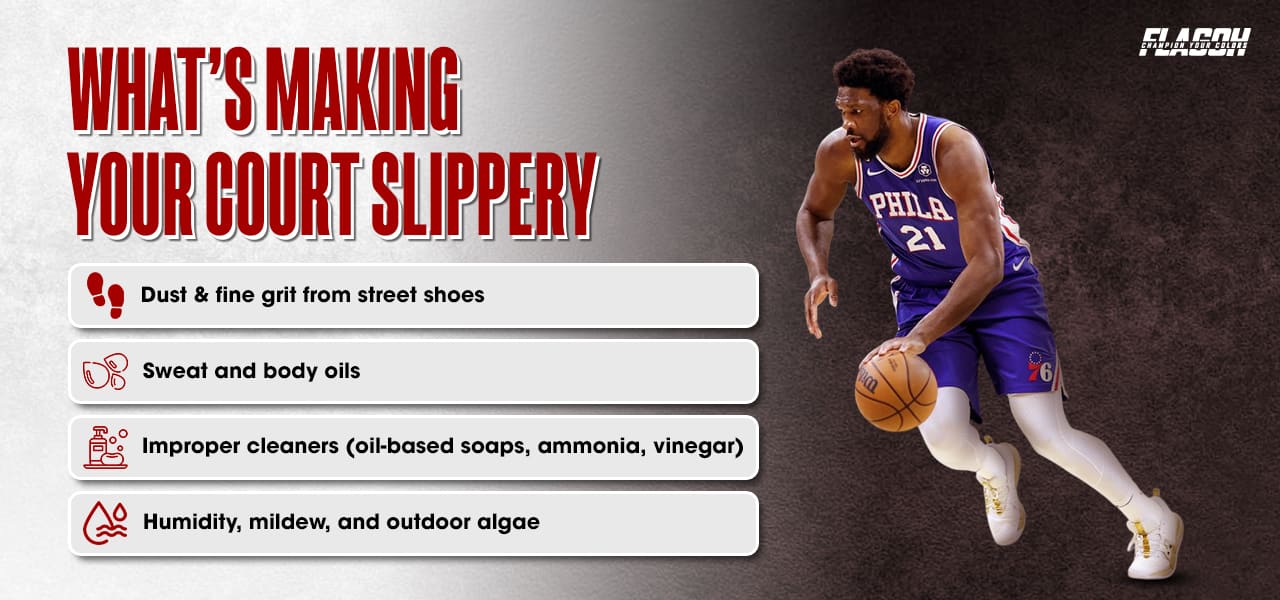
Dust and grit from shoes
Dust and grit are among the biggest causes of poor court grip. Dirt gets tracked in from hallways, sidewalks, parking lots, and entryways, then settles into a fine layer across the surface. On hardwood, that layer slowly wears down the finish. On outdoor courts, it can mix with moisture and create a slick film.
That is why dry dust removal is the foundation of proper court care. If you skip it, every other step becomes less effective.
Sweat, body oils, and spilled drinks
Basketball courts naturally collect sweat, body oils, and spilled drinks during use. Sports drinks are especially problematic because they leave a sticky residue that grabs more dirt and creates uneven traction across the floor.
Even if the surface still looks clean from a distance, those residues can change how it feels underfoot.
Residue from the wrong cleaners
One of the most common cleaning mistakes is using a product that leaves behind a film. Some household cleaners make the surface look shiny, but that shine often comes with residue that makes the surface more slippery after cleaning.
A basketball court should feel clean and dry, not glossy, greasy, or coated.
Humidity, mildew, and outdoor debris
Indoor courts can struggle with excess humidity, while outdoor courts deal with rain, algae, pollen, leaves, and mildew. In either case, added moisture makes it harder to keep the surface safe if the court is not cleaned and dried correctly.
What You Need Before You Start
Effective court cleaning depends on both the right tools and the right method. The wrong supplies can scratch the surface, spread dirty water, or leave residue behind.
Microfiber dust mop and clean pads
A wide microfiber dust mop is one of the most useful tools for basketball court care. It picks up fine dust efficiently and covers a large area quickly. Keep several clean pads ready so you can change them when they become loaded with dirt.
Neutral cleaner and rinse water
Use a pH-neutral cleaner that is suitable for sports floors or hard surfaces. Neutral cleaners are effective without being too harsh on finishes or coatings. You should also keep separate clean water ready for rinsing, so you are not moving dirty solution back over the court.
A simple two-bucket setup works well:
- One bucket for cleaning solution
- One bucket for rinse water
Soft-bristle brush and squeegee
A soft-bristle brush is useful for spot cleaning scuff marks, sticky areas, and light outdoor buildup. For outdoor courts, a floor squeegee helps remove standing water and speeds up drying after washing.
Safety signs and drying support
If the court is in active use, place wet-floor signs around the area before cleaning. For indoor courts, use fans or airflow to shorten drying time. For outdoor courts, clean during dry weather whenever possible so the surface has time to dry properly.
How to Clean a Basketball Court Step by Step
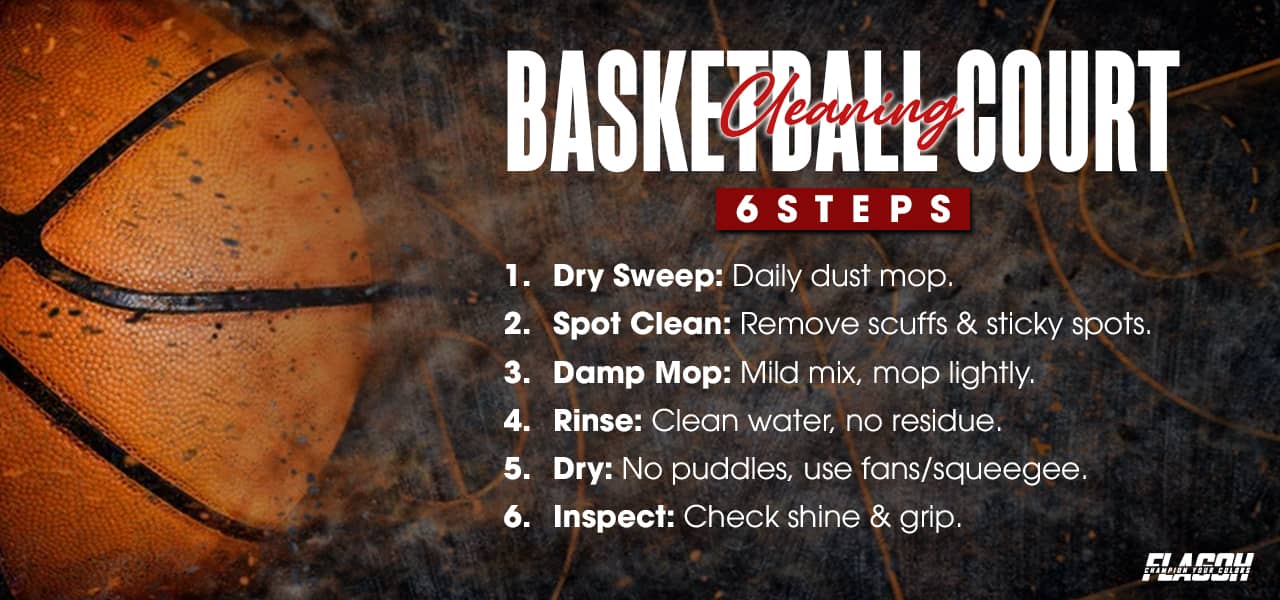
The safest way to clean a basketball court is to remove dry debris first, treat problem spots, mop with controlled moisture, rinse away residue, and let the surface dry fully before play resumes.
Step 1: Remove dry dust and loose debris
Always start with dry cleaning. Use a microfiber dust mop across the full surface in overlapping passes. Focus on baselines, sidelines, entrances, bench areas, and any other high-traffic zones where dust tends to build up.
For outdoor courts, sweep or blow away leaves, dirt, and loose debris before using water.
Step 2: Treat scuff marks and sticky spots
After the dry pass, inspect the floor for scuffs, spills, and sticky areas. Apply a small amount of neutral cleaner to a microfiber cloth or soft pad and gently work on the affected section. For stubborn spots, let the cleaner sit briefly before wiping.
Do not soak the area, and always test a new cleaner on a small, hidden section first.
Step 3: Damp mop with the correct cleaner
Mix the cleaner according to the label directions. Do not add extra product. An over-concentrated solution often leaves more residue instead of improving results.
Dampen the mop and wring it out thoroughly. The mop should be slightly damp, not dripping. Clean the court in sections so moisture stays controlled throughout the process.
Step 4: Rinse to remove residue
Once the court has been cleaned with the solution, go back over it with clean water and a fresh mop pad. This rinse step removes leftover cleaner film and helps restore a clean, natural surface feel.
A court can look clean but still feel slick if cleaner residue is left behind.
Step 5: Dry the surface quickly
Drying is part of the cleaning process, not an optional last step. Use fans indoors or a squeegee outdoors to remove moisture quickly. Never leave standing water on the court, especially on hardwood.
The surface should be fully dry before anyone uses it again.
Step 6: Check traction before play resumes
After the court dries, inspect it for haze, streaks, or missed spots. Walk the surface in proper court shoes and make sure the traction feels even from end to end.
If any section still feels slick, check for leftover residue, missed dust, or moisture that has not dried fully.
How to Clean Different Court Surfaces
Not every court should be cleaned the same way. Surface type changes how much water you can use, what tools are safe, and what kind of maintenance is needed over time.
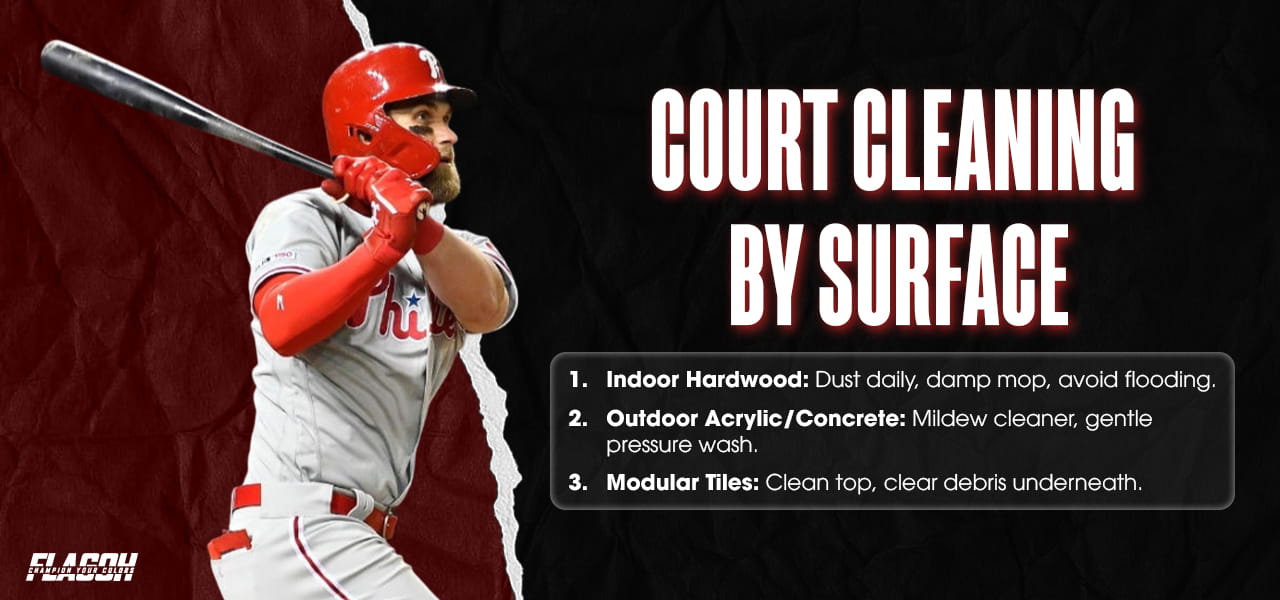
Indoor hardwood courts
Hardwood requires the most moisture control. Water should never pool on the surface, and the mop should always be well wrung out before use. Daily dust removal is especially important because fine grit slowly wears down the finish.
Routine cleaning protects the court, but it does not replace long-term finish maintenance. Depending on usage, hardwood floors may eventually need professional screening and recoating.
Key points for hardwood courts:
- Keep water use minimal
- Never allow standing water
- Use a neutral cleaner only
- Dust mop regularly
- Schedule recoating when needed
Outdoor acrylic or concrete courts
Outdoor courts face dirt, leaves, rain, algae, mildew, and other environmental buildup. Start by removing loose debris, then wash with a surface-safe cleaner as needed.
If pressure washing becomes necessary, use a controlled setting and keep enough distance to avoid damaging painted lines or surface coatings. Aggressive washing can do more harm than good.
Key points for outdoor courts:
- Clear debris before washing
- Treat algae and mildew early
- Be careful around painted lines
- Use pressure washing with restraint
- remove standing water after cleaning
Modular tile courts
Modular tile courts are durable, but dirt can collect both on top of the surface and underneath the tiles. Sweep or rinse the top regularly, and plan occasional deeper cleaning to remove trapped debris below.
If the buildup under the tiles is ignored, drainage and overall cleanliness can both get worse over time.
Key points for modular tile courts:
- Sweep the top surface often
- Rinse lightly when needed
- Check for trapped debris below
- Plan periodic lift-and-clean maintenance
What Not to Use on a Basketball Court
Some common cleaning products are not suitable for basketball courts and can reduce traction or damage the surface.
Vinegar, ammonia, and bleach
These products are often too harsh for routine sports surface cleaning. Over time, they can affect finishes, coatings, or color and create avoidable wear.
Oil-based soaps
Oil-based soaps are a poor choice because they leave a slippery film behind. A court should not feel slick after cleaning.
Wax and polish
Basketball courts are not decorative floors. Wax and polish may create shine, but they also reduce grip and work against safe play.
Over-concentrated cleaning solution
Using too much cleaner is one of the easiest mistakes to make. It leaves residue, attracts more dirt, and makes rinsing harder. Always follow the recommended dilution.
How Often You Should Clean a Basketball Court
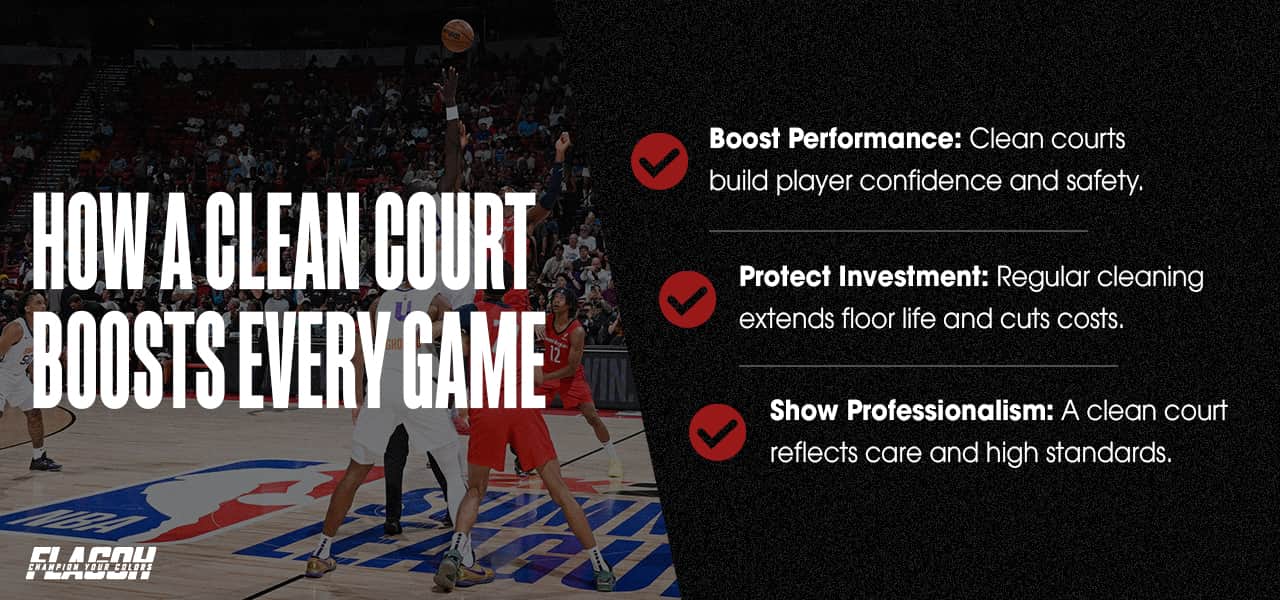
A proper cleaning schedule helps prevent buildup before it turns into a safety problem or long-term wear issue.
Daily tasks
Indoor courts should be dust-mopped daily. Outdoor courts should be swept or cleared of loose debris regularly, especially after wind, rain, or heavy use.
Weekly tasks
Handle visible scuffs, sticky spots, and spills at least weekly, or sooner if needed. A weekly inspection also helps catch problem areas before they spread.
Monthly cleaning
A full damp cleaning should be done regularly based on how often the court is used. Busy gyms may need it more often, while lower-traffic private courts may need it less. The important thing is to stay consistent.
Seasonal or annual maintenance
Long-term care depends on the court type:
- Hardwood may need professional recoating
- Outdoor courts may need algae treatment or line touch-up
- Modular tile systems may need under-tile debris removal
Routine cleaning makes these larger maintenance jobs less urgent.
Common Mistakes That Damage Court Grip
Some grip problems come from obvious neglect, but others come from cleaning the right way at the wrong time or in the wrong amount.
Letting dust build up
Fine dust is easy to overlook, but it is one of the fastest ways to reduce traction and wear down the surface.
Using too much water on hardwood
Hardwood should never be soaked. Excess water increases drying time and can damage the finish or the wood itself.
Skipping the rinse step
If you do not rinse properly, cleaner film can remain on the surface and make the floor feel slick even after a full cleaning.
Reopening the court before it is fully dry
A court that still feels damp is not ready for use. Full drying should always happen before anyone steps back onto the surface.
Tips to Keep a Court Cleaner for Longer
A few simple habits can slow dirt buildup and make routine maintenance easier.
No street shoes
Street shoes track in the grit that reduces grip and wears surfaces down faster. For indoor courts, court-only footwear makes a big difference.
Entrance mats
Place mats at entrances to catch dirt before it reaches the playing area. This small step can noticeably reduce dust buildup.
Fast spill cleanup
Clean up drinks, sweat, and sticky spots quickly. The longer the residue sits, the more dirt it collects.
Humidity control indoors
Stable indoor conditions help hardwood stay easier to maintain and reduce moisture-related issues over time.
Knowing how to clean a basketball court the right way helps improve traction, protect the surface, and reduce long-term wear. With the right cleaner, the right method, and a consistent routine, FlagOh recommends keeping every court clean, dry, and ready for play.