
 Arizona Cardinals Flag
 Atlanta Falcons Flag
 Baltimore Ravens Flag
 Buffalo Bills Flag
 Carolina Panthers Flag
 Chicago Bears Flag
 Cincinnati Bengals Flag
 Cleveland Browns Flag
 Dallas Cowboys Flag
 Denver Broncos Flag
 Detroit Lions Flag
 Green Bay Packers Flag
 Houston Texans Flag
 Indianapolis Colts Flag
 Jacksonville Jaguars Flag
 Kansas City Chiefs Flag
 Las Vegas Raiders Flag
 Los Angeles Chargers Flag
 Los Angeles Rams Flag
 Miami Dolphins Flag
 Minnesota Vikings Flag
 New England Patriots Flag
 New Orleans Saints Flag
 New York Giants Flag
 New York Jets Flag
 Philadelphia Eagles Flag
 Pittsburgh Steelers Flag
 San Francisco 49ers Flag
 Seattle Seahawks Flag
 Tampa Bay Buccaneers Flag
 Tennessee Titans Flag
 Washington Commanders Flag
 Arizona Diamondbacks Flag
 Atlanta Braves Flag
 Baltimore Orioles Flag
 Boston Red Sox Flag
 Chicago Cubs Flag
 Chicago White Sox Flag
 Cincinnati Reds Flag
 Cleveland Guardians Flag
 Colorado Rockies Flag
 Detroit Tigers Flag
 Houston Astros Flag
 Kansas City Royals Flag
 Los Angeles Angels Flag
 Los Angeles Dodgers Flag
 Miami Marlins Flag
 Milwaukee Brewers Flag
 Minnesota Twins Flag
 New York Mets Flag
 New York Yankees Flag
 Oakland Athletics Flag
 Philadelphia Phillies Flag
 Pittsburgh Pirates Flag
 San Diego Padres Flag
 San Francisco Giants Flag
 Seattle Mariners Flag
 St. Louis Cardinals Flag
 Tampa Bay Rays Flag
 Texas Rangers Flag
 Toronto Blue Jays Flag
 Washington Nationals Flag
 Atlanta Hawks Flag
 Boston Celtics Flag
 Brooklyn Nets Flag
 Charlotte Hornets Flag
 Chicago Bulls Flag
 Cleveland Cavaliers Flag
 Dallas Mavericks Flag
 Denver Nuggets Flag
 Detroit Pistons Flag
 Golden State Warriors Flag
 Houston Rockets Flag
 Indiana Pacers Flag
 LA Clippers Flag
 Los Angeles Lakers Flag
 Memphis Grizzlies Flag
 Miami Heat Flag
 Milwaukee Bucks Flag
 Minnesota Timberwolves Flag
 New Orleans Pelicans Flag
 New York Knicks Flag
 Oklahoma City Thunder Flag
 Orlando Magic Flag
 Philadelphia 76ers Flag
 Phoenix Suns Flag
 Portland Trail Blazers Flag
 Sacramento Kings Flag
 San Antonio Spurs Flag
 Toronto Raptors Flag
 Utah Jazz Flag
 Washington Wizards Flag
 Anaheim Ducks Flag
 Arizona Coyotes Flag
 Boston Bruins Flag
 Buffalo Sabres Flag
 Calgary Flames Flag
 Carolina Hurricanes Flag
 Chicago Blackhawks Flag
 Colorado Avalanche Flag
 Columbus Blue Jackets Flag
 Dallas Stars Flag
 Detroit Red Wings Flag
 Edmonton Oilers Flag
 Florida Panthers Flag
 Los Angeles Kings Flag
 Minnesota Wild Flag
 Montreal Canadiens Flag
 Nashville Predators Flag
 New Jersey Devils Flag
 New York Islanders Flag
 New York Rangers Flag
 Ottawa Senators Flag
 Philadelphia Flyers Flag
 Pittsburgh Penguins Flag
 San Jose Sharks Flag
 Seattle Kraken Flag
 St. Louis Blues Flag
 Tampa Bay Lightning Flag
 Toronto Maple Leafs Flag
 Vancouver Canucks Flag
 Vegas Golden Knights Flag
 Washington Capitals Flag
 Winnipeg Jets Flag
News
How Many NFL Wild Card Teams vs Playoff Teams
In the middle of playoff season, one question keeps coming up in every chat: how many NFL wild card teams are there, and how is that different from the total playoff field?
Quick answer: Each NFL conference sends seven playoff teams — four division winners and three wild cards — for a total of 14 postseason teams. In this guide from FlagOh, you’ll get the numbers, a clean table you can screenshot, and the Wild Card Weekend math—plus a simple way to understand how ties get sorted late in the season.
The Numbers You Actually Need First
If you found this page by typing NFL how many wild card teams, you’re in the right place. The fastest way to get unconfused is to lock in three numbers and one definition.
How Many NFL Wild Card Teams Are There?
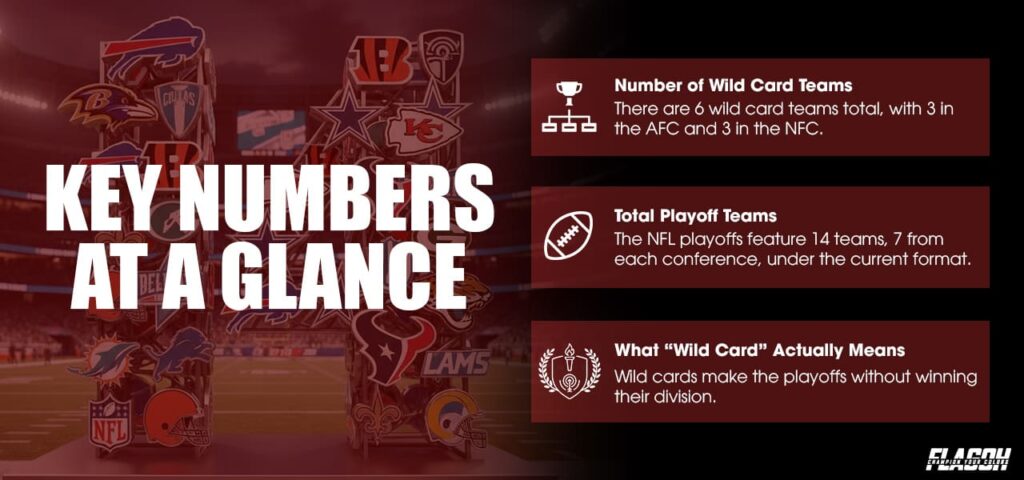
Each conference — the AFC and NFC — includes three wild card spots, for a total of six wild card teams in the entire NFL postseason.
How Many Teams Make the NFL Playoffs?
Since the 2020 playoff expansion, the NFL postseason features 14 teams total — seven from each conference. This is the modern structure most fans recognize today: a single conference bracket with seven slots, where the bottom three slots go to wild cards.
Wild Cards vs Division Winners Explained
Every playoff team has earned a postseason spot, but wild cards are the ones that get in without winning their division title. In other words, wild cards are not a separate tournament—they’re simply the non-division winners who still earned one of the remaining playoff berths.
Wild Cards vs Playoff Teams
If playoff graphics ever make you pause, this table is the quickest reference. It shows the AFC and NFC structure side by side, so you can see exactly where wild cards fit and why the seed numbers tell the real story. If you want a quick reference you can screenshot and share, this table is how we keep the format simple at FlagOh.
AFC and NFC Counts at a Glance
| Breakdown | Division Winners | Wild Cards | Total Playoff Teams | Wild Card Seeds |
| AFC | 4 | 3 | 7 | 5–7 |
| NFC | 4 | 3 | 7 | 5–7 |
| Total | 8 | 6 | 14 | — |
Every playoff team has earned a postseason spot, but wild cards are the ones that get in without winning their division title.
Who Qualifies as a Wild Card Team
A team counts as a wild card only if it reaches the playoffs without winning its division. A division winner never counts as a wild card, even if its record is worse than a wild card team’s record. That can feel counterintuitive when you scan standings by record, but it’s a feature of the system: division titles earn guaranteed placement, and wild cards fill the remaining slots.
Seed Numbers That Explain Everything
In the easiest shorthand, seeds 1–4 are division champions, and seeds 5–7 are wild cards. Once you anchor on that, you stop mixing up record alone with seeding, which is where most confusion starts.
Wild Card Weekend Math
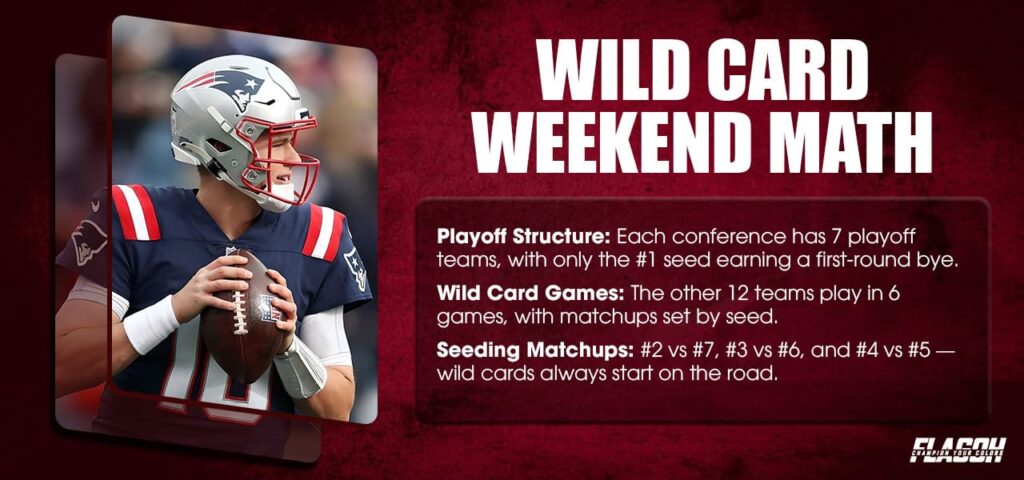
Wild Card Weekend gets simple once you know the format: with seven playoff teams per conference, only the #1 seed earns a first-round bye. That leaves 12 teams playing across six total games, with matchups set by seed.
First-Round Matchups by Seed
- #2 hosts #7
- #3 hosts #6
- #4 hosts #5
If your team is the #6 seed, it’s a wild card by definition—and it opens on the road against the #3 seed. Seeds aren’t a suggestion; they’re the map of who you play and where you start.
How Teams Earn a Wild Card Spot
The wild card race feels messy because the last spots often come down to small edges. This section shows the simple rule that fills those seats, then explains how ties are resolved so the standings make sense when records match.
The Simple Rule Behind Wild Card Spots
First, the conference places its four division winners into the playoff field. Once the four division champions are locked in, the next three best teams by record — regardless of division — claim the wild card spots.
How Ties Are Broken in the Standings
The reason fans get frustrated with tiebreakers is that they expect one obvious stat to decide everything. In reality, the NFL follows a fixed order that prioritizes direct results first, then conference context, and only later strength metrics. In most two-team wild-card ties, it starts with head-to-head (if applicable), then conference record, then common games (minimum of four), and only after that moves to measures like strength of victory and strength of schedule. The key takeaway isn’t memorizing every step—it’s knowing the order is consistent, so standings aren’t arbitrary even when they look surprising.
A Simple Way to Track the Week 18 Bubble
If you want to track the bubble cleanly, start by locking division winners so the 1–4 seed bucket is set. Then look at the remaining teams by record and identify actual ties. Once you know who’s tied with whom, you can check the relevant comparison layer instead of guessing from a TV ticker that only shows part of the story.
What to Remember Before You Go
Before you close this tab, it helps to lock in the one-line recap and a few fast answers you can reuse in conversations. This final section keeps it simple so you can explain the format without backtracking.
The Numbers to Remember
Here’s the whole format in one line: each conference sends 7 playoff teams, made up of 4 division winners and 3 wild cards, and those wild cards are seeds 5–7. If you’ve watched the league a long time and it feels “new,” that’s because the format has changed over time, so longtime fans may remember a different wild-card count.
Common Questions Fans Ask
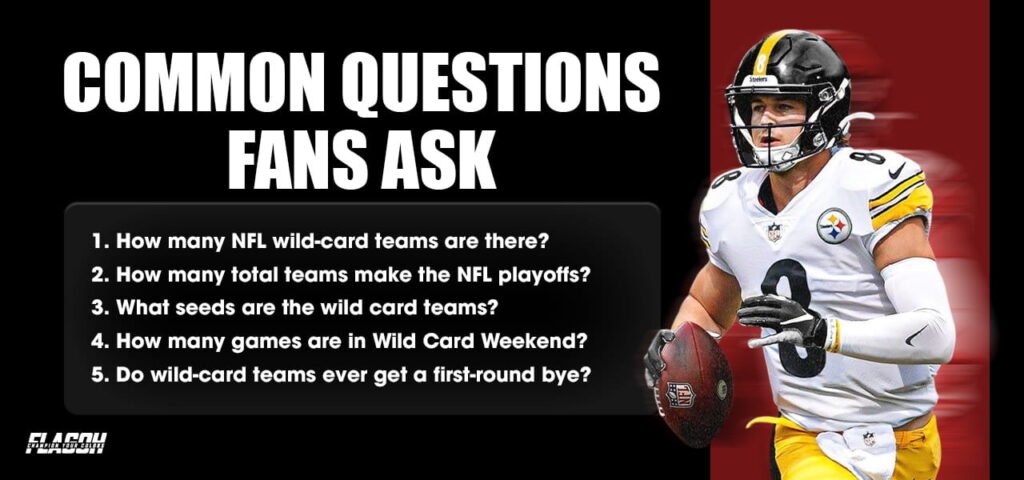
How many NFL wild-card teams are there?
Six total — three in each conference.
How many total teams make the NFL playoffs?
Fourteen — seven from the AFC and seven from the NFC.
What’s the difference between wild card teams and playoff teams?
Wild card teams are playoff teams that did not win their division; playoff teams include both division winners and wild cards.
What seeds are the wild card teams?
Seeds 5, 6, and 7 in each conference.
How many games are in Wild Card Weekend?
Six games total, because 12 teams play while the two #1 seeds have byes.
Do wild-card teams ever get a first-round bye?
No. Only the #1 seed in each conference gets one.
Can a wild-card team host a playoff game?
Not in Round 1. Higher seeds always host.
How do teams qualify for a wild-card spot?
They qualify by having one of the best remaining records in the conference after division winners are placed.
Did the NFL always have three wild cards per conference?
No. The number of wild cards has changed with playoff format changes over time.
If you’re hosting Wild Card Weekend, a simple way to make the day feel legit is a Playoff Porch Flag that stays readable from the street and holds its shape in the wind. Now that you know how many NFL wild card teams make it in, you can match the moment with a clean, durable design—browse playoff-season options at FlagOh.